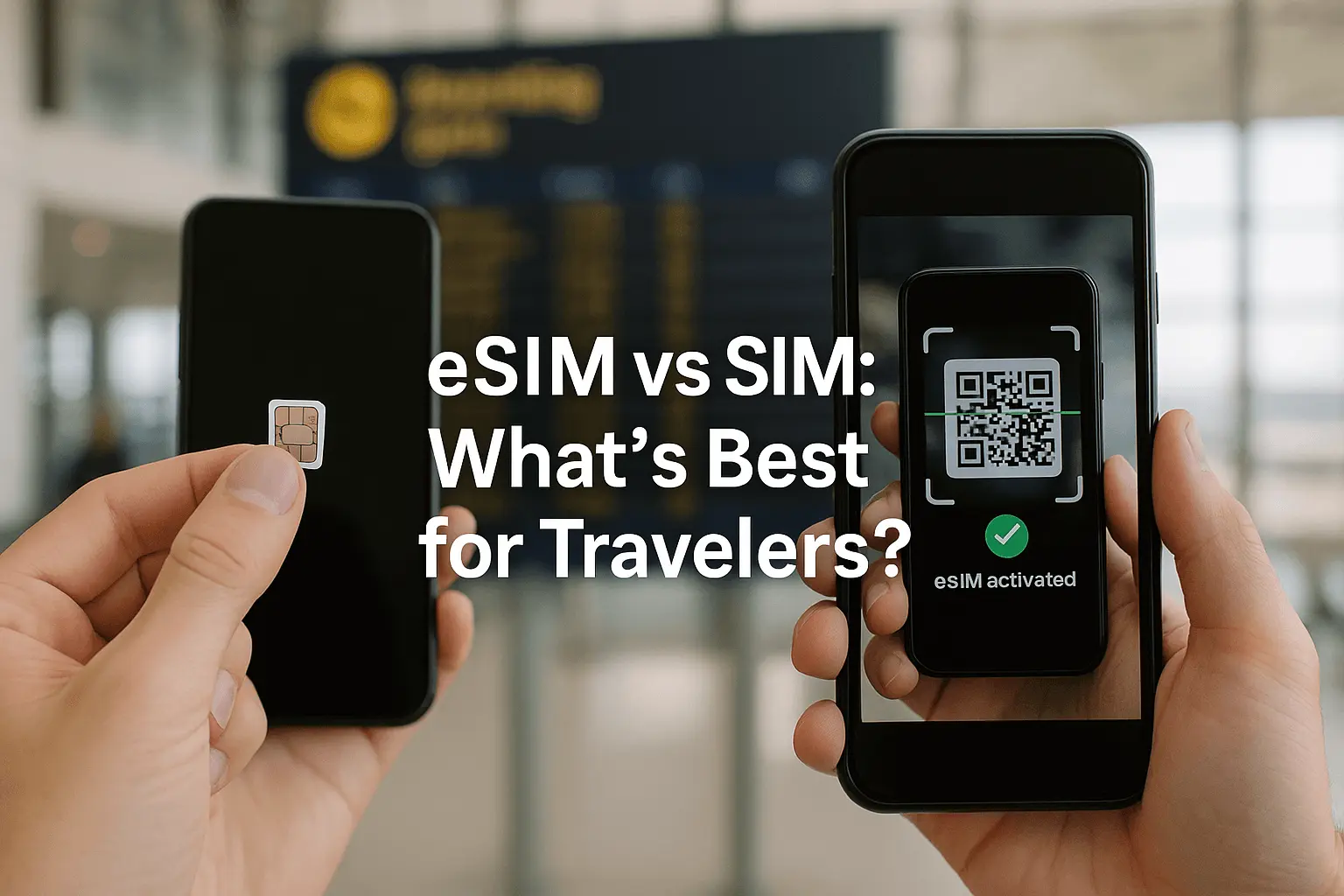
What Is an eSIM? Everything You Need to Know in 2025
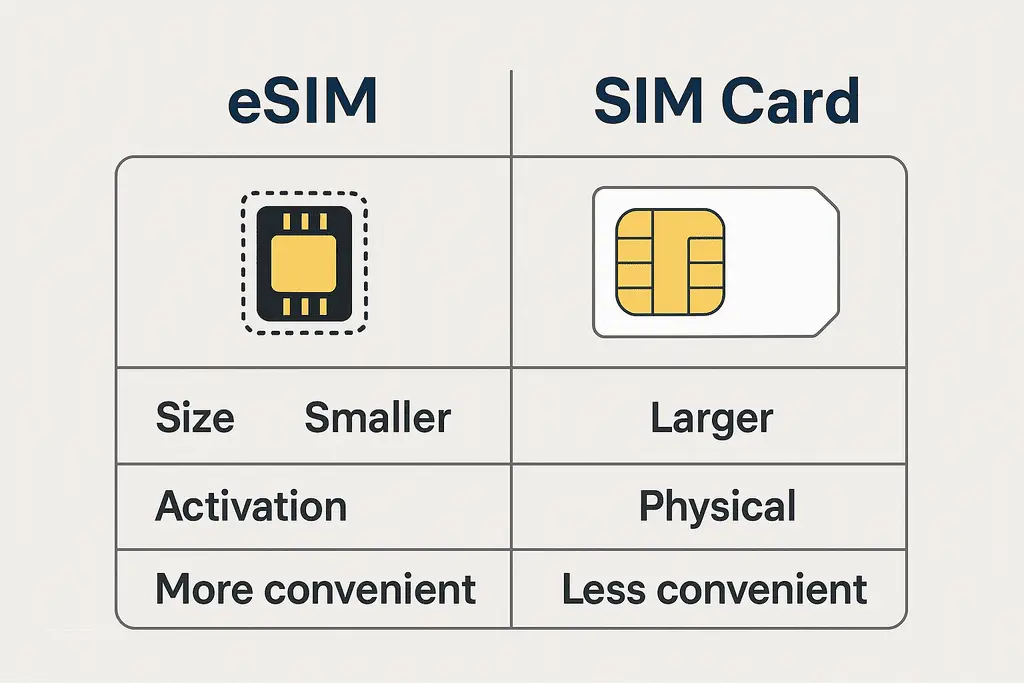
Table of Contents
eSIM technology is rapidly changing the way we connect to mobile networks, especially for international travelers, digital nomads, and anyone tired of juggling physical SIM cards. In this guide, you’ll learn what an eSIM is, how it works, which devices support it, and why it might be the future of mobile connectivity.
What Is an eSIM?
An eSIM (embedded SIM) is a digital version of a traditional SIM card. Instead of inserting a physical SIM into your phone, the eSIM is built into your device and can be activated remotely. This makes switching carriers or data plans much more convenient.
Unlike a traditional SIM card, which is removable, the eSIM is soldered directly onto the phone’s motherboard. It performs the same function—authenticating your identity with your mobile network—but without the need for a physical card.
How Does eSIM Work?
To use an eSIM, you simply download a carrier profile over the internet. This can be done by scanning a QR code provided by your mobile network or through a carrier app. Once installed, your device can connect to the network without needing a SIM card tray.
Many phones allow multiple eSIM profiles, enabling users to switch between plans or numbers without changing hardware.
eSIM vs Traditional SIM
| Feature | eSIM | Physical SIM |
|---|---|---|
| Form Factor | Embedded in device | Removable card |
| Activation | Over-the-air (QR code or app) | Manual insertion and activation |
| Switching Carriers | Instant, no hardware change | Requires swapping SIM cards |
| SIM Slot Required | No | Yes |
Which Devices Support eSIM?
More and more smartphones, tablets, and wearables support eSIM. Some of the most popular eSIM-compatible devices include:
- Apple iPhones: iPhone XR, XS, 11 and newer (including iPhone 15)
- Google Pixel: Pixel 3 and newer
- Samsung: Galaxy S20, S21, S22, Z Fold, Z Flip series
- iPad Pro and iPad Air (newer models)
- Smartwatches: Apple Watch, Samsung Galaxy Watch with LTE
Always check your device’s specs or settings to confirm eSIM support before purchasing a plan.
Why Use an eSIM? Benefits
- Travel-friendly: Instantly activate local or global data plans without buying SIMs abroad.
- Dual SIM capability: Use both a physical SIM and eSIM simultaneously for work and personal numbers.
- Eco-friendly: Reduces plastic waste from physical SIM cards.
- Convenient switching: Move between carriers or plans without changing SIMs.
How to Activate an eSIM
Activating an eSIM is straightforward. Here’s a general process:
- Choose an eSIM provider and purchase a plan.
- Receive a QR code or activation instructions.
- Go to your phone’s settings > Mobile or Cellular > Add eSIM or Mobile Plan.
- Scan the QR code or enter the activation code manually.
- Follow on-screen prompts and restart if required.
Where to Get an eSIM
There are many providers offering regional and global eSIM plans. Some popular ones include:
- eSimy.net
- Airalo
- Holafly
- Ubigi
- Nomad
Choose based on your destination, data needs, and duration of travel – you can find many sites but esimy.net offers the best reliable and cheapest e sim destinations for all World.
Frequently Asked Questions
Is eSIM better than SIM?
For many users, yes. eSIM offers flexibility, easier switching, and eliminates the need for physical cards. However, it depends on your device compatibility and personal needs.
Can I use eSIM and SIM together?
Yes, most dual-SIM phones allow using one eSIM and one physical SIM simultaneously.
Is eSIM safe?
Yes, eSIMs use the same encryption and security protocols as traditional SIMs. In some cases, eSIMs offer better protection against physical SIM card theft.
Can I remove or delete an eSIM?
Yes. You can remove an eSIM profile from your phone in settings. Note that deleting it does not cancel your data plan — check with your provider first.
How much does an eSIM cost?
Costs vary by provider and location. Some offer free profiles with paid plans; others charge for activation. Prices typically range from $5 to $40 depending on data and duration.
Conclusion
eSIMs are rapidly gaining adoption thanks to their flexibility and ease of use. Whether you’re traveling, using multiple phone numbers, or just want to avoid SIM swapping, eSIM is a smart choice in 2025. Make sure your device supports eSIM, choose a reputable provider, and enjoy seamless connectivity without the hassle of plastic cards.
Explore more: Navigating Connectivity Abroad: eSIM vs. Wi-Fi eSIM Albania, eSIM Turkey, eSIM Egypt, eSimy, Global eSIM, eSIM Europe