Best eSIM for Egypt in 2026: Complete Coverage & Data Guide
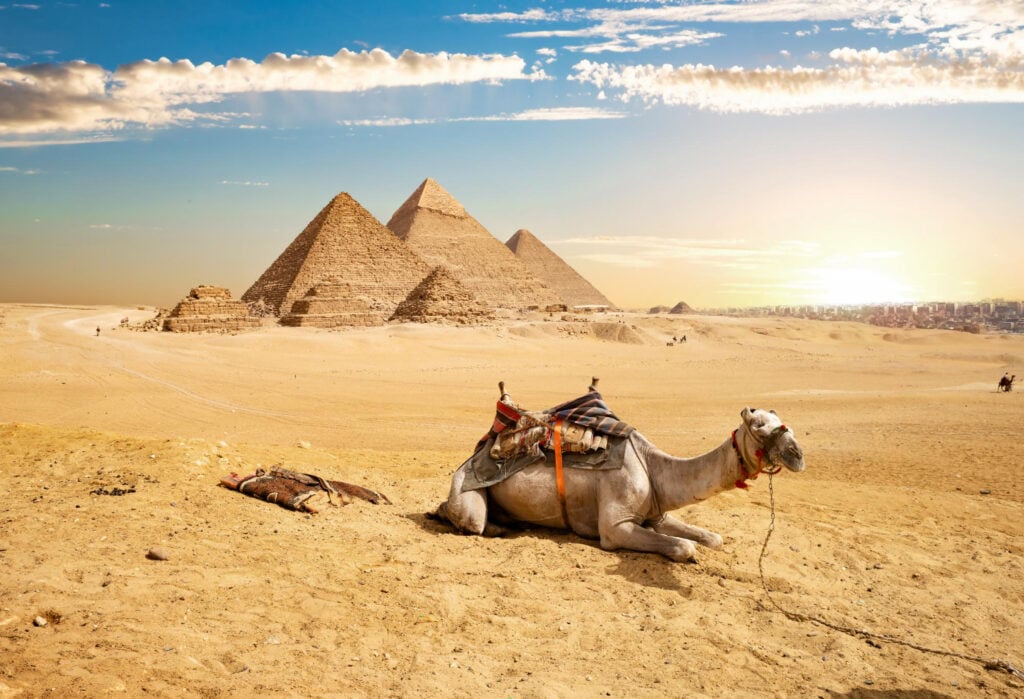
Table of Contents
Why You Need an eSIM for Egypt in 2026
Egypt attracted over 15 million international visitors in 2025, driven by the Grand Egyptian Museum’s opening near the pyramids, a booming Red Sea diving scene, and the eternal draw of the Nile Valley. Whether you’re navigating Cairo’s sprawling streets, booking an Uber through Giza’s traffic, photographing the Pyramids, or cruising the Nile from Luxor to Aswan — you need reliable mobile data throughout your trip.
Here’s what competitor guides completely miss: Nile cruises pass through areas with little or no mobile coverage for extended stretches, the area around the pyramids has surprisingly inconsistent signal, and Egypt’s desert excursions (White Desert, Siwa Oasis, Sinai Peninsula) take you genuinely off-grid. Meanwhile, Uber and Careem are essential for safe, fair-priced transport in Cairo — and both need constant data.
This guide covers Egypt’s mobile networks, destination-by-destination coverage (including the Nile cruise reality), why ride-hailing apps are non-negotiable in Cairo, the desert connectivity challenge, and the smartest way to stay connected from the pyramids to the Red Sea.
Egypt’s Mobile Networks: Which One Should Your eSIM Use?
Egypt has four mobile operators, but three matter for travellers.
Vodafone Egypt — Best Overall Coverage
Vodafone Egypt is the country’s largest carrier with approximately 40% market share and the widest coverage across the Nile Valley, Cairo, and tourist destinations. It has the most consistent signal along the Nile cruise route and the strongest coverage in Upper Egypt (Luxor, Aswan). If your eSIM routes through Vodafone Egypt, you’re in for the best tourist experience.
Orange Egypt — Strong in Cairo and Delta
Orange holds about 33% market share and provides excellent coverage in Cairo, Alexandria, and the Nile Delta. Coverage in Upper Egypt and along the Red Sea coast is good but slightly behind Vodafone. A solid choice for Cairo-focused trips.
Etisalat Misr (e&) — Growing Network
Etisalat (now branded as e&) holds about 25% market share with competitive coverage in Cairo and major cities. Coverage in Upper Egypt and remote areas is less extensive compared to Vodafone. Adequate for a Cairo-only trip.
WE (Telecom Egypt) — Limited
WE is a smaller operator with limited coverage. Not relevant for most tourists.
5G in Egypt
Egypt’s 5G deployment began in 2025 and remains limited to parts of Cairo (New Administrative Capital, Smart Village, some areas of 6th October City). 4G/LTE is the standard you should plan for — typical speeds of 10-40 Mbps are sufficient for all tourist needs.
eSIM Coverage in Egypt by Destination
Cairo
Coverage: Good to excellent throughout. Downtown Cairo, the Egyptian Museum (Tahrir Square), Khan El-Khalili bazaar, Islamic Cairo, Coptic Cairo, and Zamalek all have reliable 4G coverage from all three major carriers. Cairo’s traffic means you’ll spend significant time in cars and taxis — signal is consistent along major roads. Indoor coverage in older buildings and the bazaar’s narrow alleys can be weaker, but outdoor coverage is reliable.
Giza Pyramids and Sphinx
Coverage: Variable — and this surprises many visitors. The pyramid complex and Sphinx area have coverage, but signal strength varies across the vast site. The main viewing areas and the entrance have reliable signal. As you move toward the desert side of the pyramids or the panoramic viewpoint, coverage weakens on Orange and Etisalat, while Vodafone performs most consistently. The new Grand Egyptian Museum (GEM) near the pyramids has good coverage.
Nile Cruises (Luxor to Aswan)
Coverage: Intermittent — the biggest connectivity challenge in Egypt. This is the section no competitor covers properly. A typical Luxor-Aswan Nile cruise takes 3-4 days, and approximately 30-40% of the river route has weak or no mobile signal. The pattern:
- Strong signal: At Luxor city, at Aswan city, at Edfu and Kom Ombo (when docked at temples)
- Weak to no signal: Long stretches of the river between towns, particularly the rural sections between Edfu and Kom Ombo, and between Esna and Luxor
- Vodafone has the best Nile corridor coverage — but even Vodafone has gaps on the quieter stretches
Practical advice for Nile cruises: Download all temple information, maps, and travel guides before departing. Use onboard WiFi (most cruise ships offer it, though quality varies) for messaging when available. Upload photos when docked at temples where signal returns. Accept that parts of the Nile cruise will be a digital detox — and enjoy it.
Luxor
Coverage: Good in the city and main sites. Luxor city, Karnak Temple, Luxor Temple, and the West Bank (Valley of the Kings entrance, Hatshepsut Temple, Colossi of Memnon) all have coverage. Inside the tombs in the Valley of the Kings, signal may drop — but photography is banned inside the tombs anyway. The further into the West Bank’s desert hills, the weaker the signal becomes.
Aswan
Coverage: Good. Aswan city, the Philae Temple area, Nubian villages, and the High Dam all have Vodafone and Orange coverage. Felucca rides around Elephantine Island maintain signal. Abu Simbel — accessible by a 3-hour drive or short flight from Aswan — has basic Vodafone coverage at the temple complex, but the desert highway between Aswan and Abu Simbel has extended dead zones.
Red Sea Coast (Hurghada, Sharm El-Sheikh, Marsa Alam)
Coverage: Good in resort areas. Hurghada, El Gouna, Sharm El-Sheikh, and the Marsa Alam resort strip all have reliable coverage from all networks. Diving boat trips lose signal once you’re away from the coast — expect no connectivity during day-trip boat dives. The main beaches and hotel areas are well covered.
Sinai Peninsula
Coverage: Variable. Sharm El-Sheikh has good coverage. Dahab has decent signal in town. The road from Sharm to Dahab via the coast has stretches of weak coverage. Mount Sinai (for sunrise hikes) has very limited coverage — signal exists at the base but fades during the climb. St. Catherine’s Monastery area has basic Vodafone signal. The interior Sinai desert has minimal coverage.
Alexandria
Coverage: Good. The Corniche, Bibliotheca Alexandrina, Montaza Palace, and all tourist areas have strong coverage from all networks. Alexandria is well served for connectivity.
Desert Excursions (White Desert, Siwa Oasis, Western Desert)
Coverage: Minimal to none. The White Desert, Black Desert, and Siwa Oasis excursions take you into areas with little or no mobile coverage. Siwa town has basic Vodafone signal, but the desert routes between oases are genuinely off-grid. Your tour operator will have satellite communication for emergencies. Download everything you need before departing.
Uber and Careem: Why Your eSIM Is Essential in Cairo
This is the single most important practical reason to have mobile data in Egypt.
Why You Need Ride-Hailing Apps
Cairo’s regular taxis are an ongoing challenge for tourists: broken meters, inflated prices for foreigners, drivers who “don’t know” popular destinations, and vehicles in variable condition. Uber and Careem (owned by Uber) solve all of these problems with fixed pricing, GPS-tracked routes, driver ratings, and air-conditioned vehicles.
You need data to:
- Book rides (no offline mode)
- Track your driver’s approach and route
- Navigate to pickup points (Cairo addresses are notoriously confusing)
- Pay by card through the app (safer than carrying large amounts of Egyptian pounds)
- Share your ride status with travel companions
Cost Comparison
A Cairo street taxi from the airport to central Cairo: uncertain — potentially 200-400 EGP after negotiation (or more if the driver senses a tourist). An Uber for the same route: fixed price, typically 150-250 EGP with no surprises. The eSIM data to book the Uber costs a fraction of the taxi markup.
Setting Up
Install Uber before your trip and verify your account at home. Careem can be set up through the Uber app. Once your eSIM activates at Cairo Airport, you can book a ride immediately — skipping the aggressive taxi touts in the arrivals hall.
SIM Registration in Egypt
Egypt requires registration for all local SIM cards. Buying a physical SIM at Cairo Airport requires your passport and takes 15-30 minutes. Some providers also require fingerprint registration.
International eSIMs bypass this entirely. No passport registration, no queuing, no fingerprint scan. Your eSIM activates instantly when you enable it. That’s 30+ minutes saved at Cairo Airport — time better spent beating the traffic into the city.
How to Choose the Best eSIM Plan for Egypt
Cairo and Pyramids Short Trips (1-5 Days)
Focused on Cairo, Giza, and maybe Alexandria? 3-5 GB — you’ll use data constantly for Uber, navigation, and messaging. Cairo is a city where you’ll use more data than expected due to transport app dependency.
Classic Egypt Tour (7-14 Days)
Cairo, Luxor, Aswan, Nile cruise? 5-10 GB is ideal. The Nile cruise days use less data (poor coverage), but Cairo and temple days use more. The balance works out.
Extended Egypt and Red Sea (14-21 Days)
Full tour plus Red Sea diving or Sinai? 10-15 GB gives comfortable daily use across varying WiFi and coverage conditions. Check Esimy’s Egypt plans for the best value.
A Note on Data Speeds
Egypt’s mobile speeds are slower than European or East Asian networks. Expect 10-40 Mbps on 4G/LTE — fast enough for Uber, maps, messaging, and photo uploads, but noticeably slower for video calls and streaming compared to Japan or Western Europe. Plan accordingly.
How to Install and Activate Your Egypt eSIM
Step 1: Buy Before You Fly
Browse Esimy’s Egypt eSIM plans and select your data package. Purchase from home — no Egyptian SIM registration needed.
Step 2: Install the eSIM Profile
Scan the QR code to install. This does NOT start your plan.
On iPhone: Settings → Cellular → Add eSIM → Scan QR Code
On Android: Settings → Network & Internet → SIMs → Add eSIM → Scan QR Code
Step 3: Activate at Cairo Airport
When you land at Cairo International Airport (CAI), enable the eSIM data line. You’re connected before clearing customs — ready to book an Uber straight through the arrivals hall instead of negotiating with taxi drivers.
Step 4: Set Up Dual SIM
Keep your home SIM for calls and SMS. Set the eSIM as data. WhatsApp (essential in Egypt), Messenger, and all apps work on your original number.
Egypt Travel Tips That Save You Money
- Always use Uber/Careem in Cairo. The price difference between a street taxi and an app-booked ride is relatively small — but the experience difference is massive. Reliable pricing, air conditioning, GPS tracking, and no negotiation.
- Download temple and museum information before Nile cruises. Coverage drops on the river. Having offline guides for Karnak, Edfu, Kom Ombo, and Abu Simbel means you’re prepared regardless of signal.
- Carry cash but use apps where possible. Egypt is still heavily cash-based, but Uber accepts card payments. ATMs are available in cities — withdraw Egyptian pounds, not dollars or euros.
- Download offline maps for all destinations. Cairo, Luxor, Aswan, and the Sinai. Coverage gaps mean offline maps are essential backup everywhere outside Cairo.
- WhatsApp is Egypt’s primary messaging app. Hotels, tour operators, Nile cruise companies, and guides all use WhatsApp. Message them directly for the fastest response.
- Buy your e-visa before arrival. Egypt’s e-visa system requires an internet connection to display your visa at immigration. Have your eSIM ready, or screenshot your e-visa confirmation as backup.
- Check prices on Google before bargaining at bazaars. A quick data search at Khan El-Khalili helps you understand fair prices before negotiating. Vendors quote tourist prices that can be 3-5x the actual value.
Frequently Asked Questions
Will my eSIM work on a Nile cruise?
Your eSIM will have signal when docked at Luxor, Aswan, Edfu, and Kom Ombo temples. However, approximately 30-40% of the river route between towns has weak or no mobile signal. Vodafone Egypt provides the best Nile corridor coverage. Download guides and maps before the cruise, and use onboard WiFi when available.
Which network is best for tourists in Egypt?
Vodafone Egypt has the best overall coverage for tourists, with approximately 40% market share and the most consistent signal across the Nile Valley, Cairo, and tourist destinations. Orange Egypt is a close second in Cairo and the Delta region. Both are reliable for a standard Egypt tour.
Do I need to register my eSIM in Egypt?
No. Egypt requires passport and sometimes fingerprint registration for local physical SIM cards, but international eSIMs are exempt. Your eSIM activates instantly without any Egyptian registration process.
Can I use Uber in Egypt?
Yes — and you should. Uber and Careem (part of Uber) are widely available in Cairo, Giza, Alexandria, and Hurghada. They provide fixed pricing, air-conditioned vehicles, and GPS tracking — solving the biggest challenges with Cairo’s regular taxis. Both apps require an active data connection.
Is there mobile coverage at the Pyramids?
Yes, but signal strength varies across the large pyramid complex. Main viewing areas and the entrance have reliable signal. The desert side and panoramic viewpoints can have weaker coverage. Vodafone is most consistent across the site. The Grand Egyptian Museum has good coverage.
How much data do I need for a week in Egypt?
For a tourist using Uber daily in Cairo, maps, WhatsApp, and social media, 5-7 GB per week is comfortable. Cairo-heavy trips use more data due to constant Uber usage. Nile cruise weeks use less since coverage is intermittent. Budget 3-5 GB for a cruise-focused week.
Is there coverage in the Sinai Peninsula?
Sharm El-Sheikh and Dahab have decent coverage. Mount Sinai has limited signal that fades during the climb. The interior Sinai desert has minimal to no coverage. Download offline maps and save essential information before Sinai excursions.
Is 5G available in Egypt?
5G deployment began in 2025 but is still very limited — mainly in parts of Cairo’s new developments. 4G/LTE is the realistic standard across Egypt. Speeds (10-40 Mbps) are lower than European or East Asian networks but sufficient for all tourist activities.
Do I need a VPN in Egypt?
Most tourist activities work fine without a VPN. VoIP calls (WhatsApp calls, FaceTime) work normally. Some websites may be blocked, but social media and messaging apps function without issues. A VPN is not essential for the average tourist.
Can I keep my WhatsApp working with an Egypt eSIM?
Yes. Set your eSIM as the data line and keep your home SIM for calls and SMS. WhatsApp — essential for communicating with hotels, guides, and tour operators in Egypt — continues working on your original phone number using the eSIM data.
eSIM Plans for Destinations in This Article


Travel smarter with eSimy
Instant eSIM plans for 165+ countries. Activate in seconds, connect before you land.
Get Your eSIM Now