Best eSIM for Albania in 2026: Complete Coverage & Data Guide
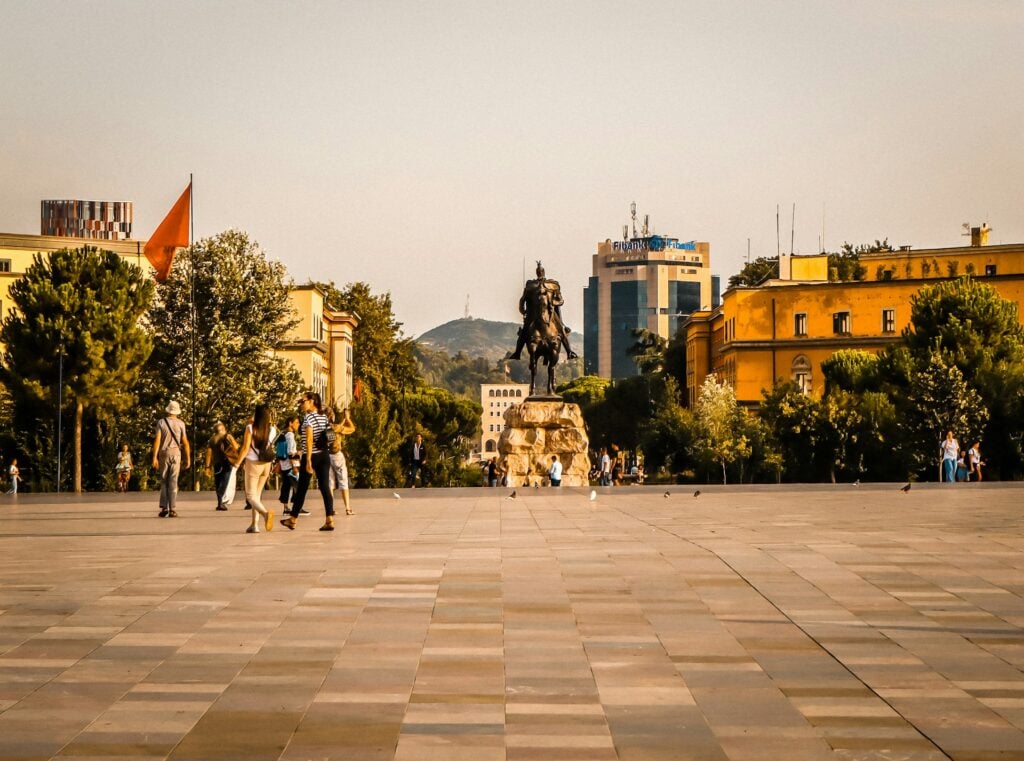
Table of Contents
Why You Need an eSIM for Albania in 2026
Albania has exploded as a travel destination — visitor numbers exceeded 10 million in 2025, making it one of Europe’s fastest-growing tourism markets. The Albanian Riviera, Tirana’s vibrant cafe culture, UNESCO-listed Berat and Gjirokastër, and the wild Albanian Alps are drawing travellers who previously would have headed to Greece or Croatia — at a fraction of the cost.
But here’s the detail that catches most visitors off guard: Albania is NOT in the European Union. This means EU “Roam Like At Home” does not apply. Your EU mobile plan will charge you roaming fees in Albania just like it would in Turkey or Egypt. Many EU travellers arrive expecting free roaming and get a shock when roaming charges appear on their bill.
This guide covers Albania’s mobile networks, the EU roaming trap, coverage by destination (including the Albanian Alps where signal disappears entirely), why this matters for driving the Riviera, and why an eSIM is the smartest connectivity solution for Europe’s most underrated destination.
Albania Is NOT in the EU: Why This Changes Everything
This is the single most important fact for travellers to understand, and no competitor covers it well enough.
The Roaming Trap
Albania is an EU candidate country but not an EU member. This means:
- EU/EEA roaming regulations do NOT apply — “Roam Like At Home” does not cover Albania
- Your EU mobile operator can (and will) charge you roaming fees — typically €2-10 per MB
- A single day of normal phone use in Albania could cost €20-50 in roaming charges on an EU plan
- Many travellers from Germany, France, Italy, and other EU countries arrive expecting free roaming — and get an unpleasant surprise bill
What This Means for You
Even if you have an “unlimited” EU mobile plan, it does NOT cover Albania. You need either:
- An international eSIM (recommended — buy before you travel, fixed price, no surprises)
- A local Albanian SIM card (requires passport registration, only works in Albania)
- To accept expensive EU roaming charges (not recommended)
An Esimy eSIM gives you a fixed data package at a known price — no surprise roaming charges, no passport registration for a local SIM, and instant activation when you land.
The Multi-Country Angle
Many travellers visit Albania as part of a Balkans trip — combining it with Montenegro, North Macedonia, or Greece. An international eSIM that covers multiple countries is far more practical than buying a new SIM card at every border crossing. Check your plan’s country list to see if your neighbouring Balkan destinations are included.
Albania’s Mobile Networks: Which One Should Your eSIM Use?
Albania has three mobile operators.
Vodafone Albania — Best Choice for Tourists
Vodafone holds about 33% market share and provides excellent coverage across all major tourist destinations — Tirana, Durrës, Vlorë, the Albanian Riviera towns, Berat, Gjirokastër, and Shkodër. Urban 4G speeds are strong and Vodafone’s international roaming partnerships mean most eSIM providers route through Vodafone Albania, giving you reliable coverage everywhere tourists actually go.
One Albania (formerly Telekom Albania) — Largest Carrier
One Albania is the country’s largest carrier with approximately 37% market share and the widest geographical coverage, including deeper reach into rural villages and mountain areas. However, for the destinations most tourists visit, Vodafone provides comparable coverage.
ALBtelecom — Smallest Operator
ALBtelecom holds about 15% market share with the most limited coverage of the three. Not recommended for tourists exploring beyond major cities.
4G and 5G in Albania
Albania has 4G/LTE coverage in all major cities and most towns. 5G is not yet commercially available in Albania (as of early 2026). Real-world 4G speeds are 15-40 Mbps in cities and 5-15 Mbps in rural areas. Slower than Western European countries but sufficient for navigation, messaging, social media, and photo uploads. Video calling quality depends on location.
eSIM Coverage in Albania by Destination
Tirana
Coverage: Good on all networks. Skanderbeg Square, Blloku district, the Grand Park, the artificial lake area, and all tourist zones have reliable 4G coverage from all three carriers. Tirana’s cafes and restaurants generally have WiFi, but you’ll need mobile data for getting around — the city is expanding quickly and Google Maps is essential for navigation.
Albanian Riviera (Ksamil, Saranda, Himara, Dhërmi)
Coverage: Decent in towns, variable on coastal roads. Saranda, Ksamil (near the Greek border), and Himara have decent coverage from Vodafone and One Albania. The famous beaches — Gjipe, Dhërmi, Jalë — have varying signal depending on terrain. The winding coastal road (SH8) between Vlorë and Saranda has intermittent dead zones as it snakes through mountain tunnels and cliff sections. Vodafone provides reliable signal in the Riviera’s towns and main beach areas.
Pro tip: If you’re driving the Riviera road, download offline Google Maps. The road is narrow, winding, and has few signs — losing navigation mid-drive is stressful. Offline maps are your safety net in the mountain sections where signal drops.
Berat (UNESCO World Heritage Site)
Coverage: Good in the city. Berat’s old town, the castle, Mangalem and Gorica quarters, and the main commercial area all have decent coverage. The surrounding countryside and the road between Berat and Tirana maintain signal through most sections.
Gjirokastër (UNESCO World Heritage Site)
Coverage: Good in the city, variable in surroundings. Gjirokastër’s old town and castle area have coverage from Vodafone and One Albania. The road from Gjirokastër to the Greek border and to the Blue Eye Spring maintain mostly consistent signal.
Albanian Alps (Theth and Valbona)
Coverage: Extremely limited — plan for disconnection. This is Albania’s most dramatic landscape — and its most disconnected. Theth village has very limited or no mobile signal. The hiking trail from Theth to Valbona (the famous Peaks of the Balkans route) has no coverage for most of the 6-8 hour trek. Valbona village has slightly better signal than Theth but still inconsistent.
The road to Theth from Shkodër is a rough mountain road with no signal for much of the drive. If you’re hiking the Albanian Alps:
- Download offline maps for the entire route
- Save guesthouse contact information offline
- Tell someone your hiking plan before you leave signal range
- Carry a portable battery — you won’t find charging points on the trail
- Embrace the digital disconnection as part of the experience
Shkodër and Lake Shkodër
Coverage: Good in town, weaker at the lake. Shkodër city has reliable coverage. The road around Lake Shkodër toward Montenegro and the lakeside areas can have weaker signal. The Rozafa Castle has coverage with great views to match.
Durrës
Coverage: Good. Albania’s second city and main beach resort has reliable coverage from all networks. The archaeological amphitheatre area and the beach promenade are well covered.
Vlorë and Llogara Pass
Coverage: Good in Vlorë, variable at Llogara. Vlorë city has strong coverage. Llogara Pass — the stunning mountain road connecting Vlorë to the Riviera — has intermittent coverage due to the altitude and terrain. Vodafone covers the pass but signal is intermittent at the highest points.
Korçë and Southeastern Albania
Coverage: Good in Korçë, basic in surroundings. Korçë (known for its cafes and brewery culture) has decent coverage. The surrounding areas, including the road to Voskopojë and the Prespa Lake area near the Greek/North Macedonian border, have more limited coverage.
Driving in Albania: Why Your eSIM Matters
Many tourists explore Albania by rental car, and GPS navigation is absolutely essential. Albanian roads range from modern highways (the A2 to Fier, the A3 to Kosovo) to terrifying mountain tracks (Theth road, parts of the Riviera). Street signs are inconsistent, road numbering can be confusing, and local driving style is adventurous.
Key Driving Routes and Coverage
- Tirana to Saranda (A2 + SH8): Good coverage on the highway to Fier and Vlorë. Intermittent on the Riviera mountain road.
- Tirana to Shkodër: Good coverage throughout on the improved highway.
- Shkodër to Theth: Coverage drops off sharply after leaving the main road. Dead zones for much of the mountain drive.
- Llogara Pass: Intermittent coverage through the mountain pass.
- Tirana to Korçë: Good coverage on the main road, variable on secondary roads.
Essential: Download offline Google Maps for all of Albania before starting your road trip. Even with a Vodafone-routed eSIM, mountain roads will have dead zones.
How to Choose the Best eSIM Plan for Albania
Short Visits (1-5 Days)
Tirana city break or quick Riviera visit? 1-3 GB with WiFi at your hotel/hostel. Albania’s accommodation generally offers WiFi.
Albanian Riviera and Beach Holidays (7-14 Days)
Beach hopping from Saranda to Himara? 3-7 GB. The Riviera’s beach bars usually have WiFi but quality varies. Mobile data for navigation on the coastal roads is essential.
Road Trip and Alps Adventures (7-14 Days)
Full Albania road trip including the Alps? 5-10 GB. You’ll use more data for constant navigation. Much of the Alps won’t have signal anyway, so your data goes further. Check Esimy’s Albania plans for the best value.
Balkans Multi-Country Trips
If you’re combining Albania with Montenegro, or North Macedonia, choose an eSIM plan that covers multiple countries. This avoids buying new SIMs at every border. Check your plan’s country coverage before you travel.
How to Install and Activate Your Albania eSIM
Step 1: Buy Before You Fly
Browse Esimy’s Albania eSIM plans and select your data package. Purchase from home — no Albanian SIM registration needed.
Step 2: Install the eSIM Profile
Scan the QR code to install. This does NOT start your data plan.
On iPhone: Settings → Cellular → Add eSIM → Scan QR Code
On Android: Settings → Network & Internet → SIMs → Add eSIM → Scan QR Code
Step 3: Activate at Tirana Airport
When you land at Tirana International Airport (TIA), enable the eSIM data line. Connected instantly — navigate to your hotel without relying on airport WiFi or expensive roaming.
Step 4: Set Up Dual SIM
Keep your home SIM for calls and SMS. Set the eSIM as data. WhatsApp, Messenger, and all messaging apps work on your original number using the eSIM data — without triggering your home carrier’s Albanian roaming charges.
Albania Travel Tips That Save You Money
- Turn off mobile data on your home SIM immediately. Since Albania is not in the EU, your EU plan’s roaming charges apply. Switch data to your eSIM only. Keep your home SIM for calls/SMS only (or disable it entirely to avoid accidental data charges).
- Download offline maps for the entire country. Albania’s mountain roads, Riviera coast, and Alps all have dead zones. Offline Google Maps is essential for any driving trip.
- Albania is incredibly cheap. Expect to pay €3-6 for a meal, €1 for coffee, and €20-40 for a good hotel room. Your biggest expense will likely be car rental, not food or accommodation.
- Carry cash (Albanian Lek). Albania is still very cash-based. ATMs exist in cities but are scarce in small towns and at beaches. Some Riviera beach bars only accept cash.
- WhatsApp and Instagram work everywhere you have signal. Albanian businesses increasingly use WhatsApp for bookings and communication. Instagram is also popular for finding Riviera beach recommendations.
- Check border crossing hours. If entering from Greece (Kakavijë), Montenegro (Hani i Hotit), Kosovo (Morina), or North Macedonia (Tushemisht), border posts have specific hours. Google Maps directions (data needed) will route you correctly.
- The Blue Eye spring and Butrint are accessible from Saranda. Both are day trips requiring navigation on secondary roads — have offline maps ready.
Frequently Asked Questions
Does EU roaming work in Albania?
No. Albania is not an EU member, so “Roam Like At Home” does not apply. Your EU mobile plan will charge roaming fees in Albania — typically €2-10 per MB. Many EU travellers are caught off guard by this. An international eSIM gives you a fixed data price without roaming surprises.
Which network is best for tourists in Albania?
Vodafone Albania provides excellent coverage across all major tourist destinations — Tirana, the Albanian Riviera towns, Berat, Gjirokastër, and Shkodër. Most international eSIM providers route through Vodafone, and its coverage reliably serves everywhere tourists actually visit. One Albania has slightly wider rural reach, but for standard tourist itineraries, Vodafone delivers strong performance.
Will my eSIM work in the Albanian Alps (Theth/Valbona)?
Coverage in the Albanian Alps is extremely limited. Theth has very limited or no signal. The Theth-Valbona hiking trail has no coverage for most of the trek. Valbona has slightly better but still inconsistent signal. Download offline maps, save guesthouse details offline, and plan for genuine digital disconnection.
Is there coverage on the Albanian Riviera?
Towns like Saranda, Ksamil, and Himara have decent coverage. The coastal road (SH8) between Vlorë and Saranda has intermittent dead zones through mountain tunnels and cliff sections. Some beaches have signal, others don’t. Download offline maps before driving the Riviera.
How much data do I need for a week in Albania?
For an average tourist using maps, messaging, social media, and restaurant searches, 3-5 GB per week is comfortable. Road trip travellers relying heavily on navigation should budget 5-7 GB. Much of the Alps and remote areas won’t have signal, so your data goes further than in well-connected countries.
Do I need to register my eSIM in Albania?
No. International eSIMs don’t require registration in Albania. Local physical SIM purchases require passport registration, but eSIMs from international providers bypass this entirely.
Is 5G available in Albania?
No. As of early 2026, Albania does not have commercial 5G networks. 4G/LTE is available in cities and most towns with speeds of 15-40 Mbps. Rural areas may have 3G or no coverage. 4G speeds are sufficient for navigation, messaging, and social media.
Can I use my Albania eSIM in neighbouring countries?
It depends on your eSIM plan. Some international eSIM plans cover multiple Balkan countries (Albania, Montenegro, North Macedonia, Greece). Check your specific plan’s country list before crossing borders. If your plan only covers Albania, you’ll need to arrange separate coverage for other countries.
Is Uber available in Albania?
No. Uber and other international ride-hailing apps do not operate in Albania. Taxis are the main transport option — agree on a price before getting in, or ask your hotel to arrange transfers. In Tirana, some local apps exist, but most tourists use hotel-arranged taxis or walk.
Can I keep my WhatsApp working with an Albania eSIM?
Yes. Set your eSIM as the data line and keep your home SIM for calls and SMS. WhatsApp, Messenger, and all messaging apps work on your original number — using the eSIM data instead of your home carrier’s expensive Albanian roaming.
eSIM Plans for Destinations in This Article


Travel smarter with eSimy
Instant eSIM plans for 165+ countries. Activate in seconds, connect before you land.
Get Your eSIM Now