Tunisia 2025: The Mediterranean Gem Still Off the Beaten Path
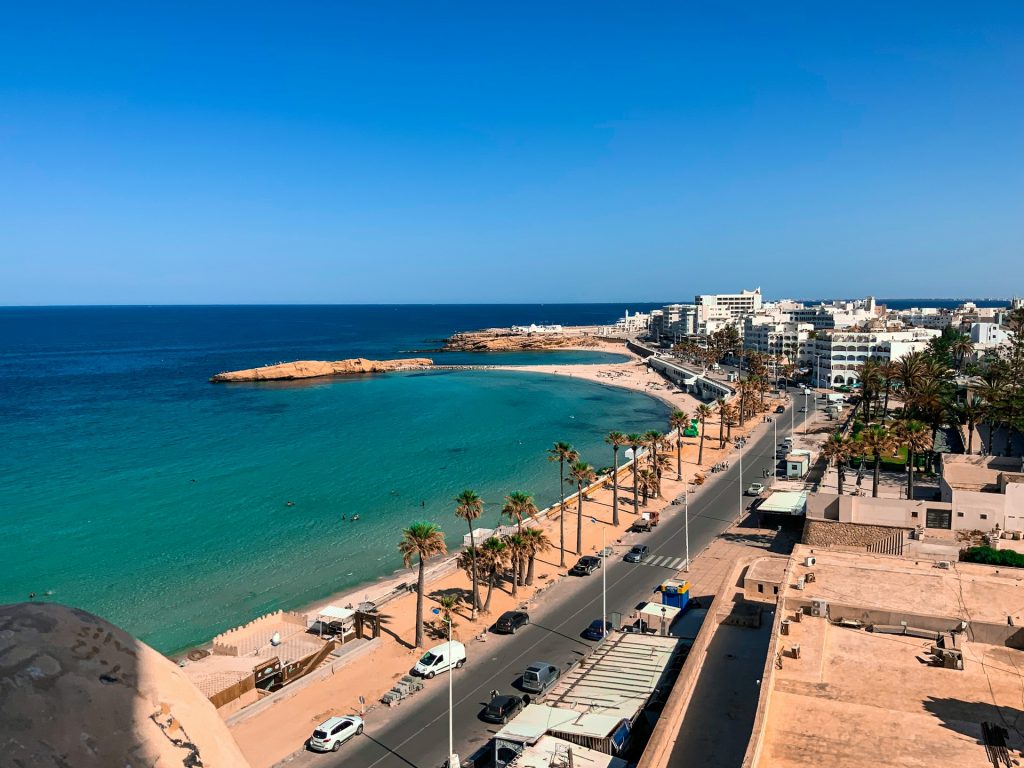
Table of Contents
There are nations which seem discovered, refined and ready for tourists, and then there is Tunisia. Nestled between Algeria and Libya on the southern slopes of the Mediterranean, it is one of those portions of the world in which time folds splendidly; ancient ruins, turquoise waters, sand dunes and café discussions are all existent in the picture.
In 2025, Tunisia is stealthily becoming a favorite to travelers who are tired of benighted European resorts. It is cheap, diversified, and oddly enough advanced, especially for travelers with eSIMs.
Whether you are wandering languidly through the Roman ruins at Carthage, strolling through the beaches of Hammamet or camping by the verdure dunes of the Sahara, Tunisia links up history with the present. And with Esimy, you are linked up too!
A country which links up history with warmth.
The splendor of Tunisia is that it gives you all and it is near. The country is about as large as the American state of Georgia. This means that you can have breakfast on the mountains, lunch by the sea, and dinner beneath the stars in the desert.
Begin at Tunis, the capital. A delightful medley of French colonial boulevards and ancient medinas, house the Bardo Museum, where lies one of the finest collections of Roman mosaics in the world. Here you will tarry longer than intended. Thence a little tram or taxi ride takes you to Carthage, once mighty rival of Rome, but now a ghostly beautiful archaeological site overlooking the sea.
In a short distance is Sidi Bou Said, blue-and-white village up among the cliffs. Its phantasmagoria is an amalgam from Santorini and Andalusia. Time takes on a different pace here as mint tea is sipped, seagulls glide about, and the existence of the modern world can be forgotten — until, perhaps, the time comes to consult your phone to find that the eSIM has a perfect signal.
From Coast to Desert: The Contrasts of Tunisia
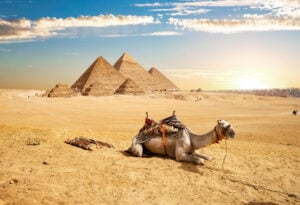
Heading southwards, the Mediterranean gives way to miles of golden sands. The vastness of the Sahara Desert takes up nearly a third of Tunisia, offering a wholly differenct pace of life experience.
Here is also Douz, ‘The Door to the Sahara’ where the arrival of each winter is celebrated by the natives with the International Festival of the Sahara, where camel races, Berber songs and desert lunacies mingle in riotous colours. A night under a sky of stars whose brightness will seem unreal, and you will understand the powerful appeal of the simplicity that Tunisia offers to so many travellers.
Still more to the north is El Djem with one of the best preserved Roman amphitheatres known to the world, and in the spaciousness of its surroundings, where there is no introduction of life, a strong, almost electric, atmosphere will prevail. The imperious beauty of the amphitheatre is made overwhelming by the quiet of the farmlands.
Dougga is another of the examples of the UNESCO camp we have mentioned before, where in the hills the ancient temples still stand, a witness to a civilization which will always be, a legacy of historic wonder. Tunisia easily administers a returned curiosity.
Each detour leads to discovery. And if it is only to rest that you would come, the coast is here also, for Hammamet, Sousse and Monastir are full of resorts that can give the Mediterranean comforts at prices that would appall the tourist to Spain or Italy. Here you can sunbathe, explore medinas and enjoy the warm-hearted hospitality, all possibly in the same afternoon.
Culture at Any Angle
What makes Tunisia what it is, is not only its landscapes but its people and the rhythm of its daily life. Cafés are bustling, and markets are full of spices and pottery. The call to prayer fills the narrow streetways, where the scent of jasmine is in the air.
The Tunisian kitchen is an instant familiarity for Turkish visitors – a link between North Africa, the Mediterranean and the Middle East. Couscous, brik (crispy pancake stuffed with egg and tuna), hot harissa, grilled fish, mint tea – the flavours are rich, but comforting.
And there’s the warm, soft hospitality. It’s not the polish of the “tourist smile”: it’s the inquiry of genuine curiosity. People ask where one comes from; they are not trying to sell something, but to make contact; such is rare these days.
Travel Practicalities for 2025
Traveling to Tunisia from Turkey or Europe has never been easier. There are direct flights from Istanbul to Tunis, Sousse and Monastir, which take often less than three hours. Turkish citizens can travel visa free for 90 days, which makes for tempting opportunities of spontaneous journeys.
The best time to visit, is March to June, or September to November – mildness and less crowded, and warm seas. Summer (July–August) means high temperatures, but the inland breeze at the coast keeps them digestible.
The currency of Tunisia is the Tunisian Dinar (TND). The prices are reasonable — hotels, restaurants and taxis are very often half the cost than in southern Europe. In souks, bargaining is the order, but circumstances will endear such to be done with a smile. Staying Connected with Esimy
One of the great modern conveniences of travel is not having to look for a SIM card upon arrival. With Esimy’s Tunisia eSim, you simply scan a QR code and you’re immediately online – with 4G/5G in all major cities and desert routes between.
That means, for example, that you can navigate the warren of streets and alleyways in the medina in Tunis in real-time, anything you want translated into French or Arabic instantaneously, and send home your videos of sunsets over the Sahara without worrying about roaming costs.
Plans start from as little as €2.45/7 day and, if you use the code GPT5, you will receive 5% off – a little bonus for being clever and remaining connected.
There is also the possibility of topping up your account directly through Esimy, so generating more data during your trip to Tunisia is seamless and fluid.
Whether a digital nomad, content creator or just a traveler who likes to know where the next café is on Google Maps, Esimy ensures that that your adventure through Tunisia is fluid and connected.
Why Tunisia is so Underrated
Tunisia does not cause any commotion begging for attention – it simply is there, an understated beauty. It does not try to be the “next big thing” and that is its charm.
You can wander the streets for hours without seeing another soul, watch fishermen working on their nets, converse with students over a coffee, or visit ruins where you will probably be the only person there.
It is more than a trip, it is an experience that unfolds slowly, like a conversation that becomes more interesting the longer the discourse lasts.
Plan Your Tunisia Trip in 2025
So, whether it is the mystery of ancient Carthage, the tranquility of Hammamet’s beaches or the magic of a night in the Sahara, Tunisia has it all – affordable, authentic, close enough to seem familiar, but distant enough to seem like an adventure.
Stay connected, stay inspired and travel intelligently with Esimy, your travel companion from the Mediterranean to the dunes and explore our eSIM for Tunisia
eSIM Plans for Destinations in This Article


Travel smarter with eSimy
Instant eSIM plans for 165+ countries. Activate in seconds, connect before you land.
Get Your eSIM Now