 Connected in Ethiopia
eSIM Ethiopia
Get online at Addis Ababa Bole, on a layover or a two-week loop of the north
Choose a Ethiopia eSIM plan
Choose the perfect plan for your Ethiopia adventure
1 GB
7 Days- 1 GB Internet
- Wi-Fi Hotspot Allowed
- Instant Activation
- Validity Starting on First Use
3 GB
30 Days- 3 GB Internet
- Wi-Fi Hotspot Allowed
- Instant Activation
- Validity Starting on First Use
5 GB
30 Days- 5 GB Internet
- Wi-Fi Hotspot Allowed
- Instant Activation
- Validity Starting on First Use
10 GB
30 Days- 10 GB Internet
- Wi-Fi Hotspot Allowed
- Instant Activation
- Validity Starting on First Use
All plans include 4G/5G coverage across Ethiopia • No contracts • Instant Activation
Why travelers choose Esimy
- No contracts
- 24-hour days, counted from your first connection at your destination
- Add data to the same eSIM anytime
- Wi-Fi hotspot: Allowed on all plans
Before you buy your Ethiopia eSIM
Is my phone compatible?
Quick check: dial *#06# on your phone. If an EID number appears, your phone supports eSIM. It also needs to be carrier-unlocked.
How much data do I need?
A rough estimate based on typical use. Video and hotspot use the most data.
eSIM Ethiopia for a Bole layover or the historic north
Our eSIM Ethiopia plan connects to Ethio Telecom and Safaricom on 4G/LTE, and if you install it at home it’s working by the time you walk into the terminal at Addis Ababa Bole International Airport.
Bole is the reason this matters. Buying a local Ethiopia SIM card means queuing at an operator shop with your passport, and a layover of a few hours between Ethiopian Airlines flights doesn’t leave time for that. Roaming on your home plan is usually expensive.
Coverage is good in Addis Ababa and in the towns of the northern circuit: Bahir Dar, Gondar, Lalibela and Axum. Ethio Telecom reaches further into the countryside, while Safaricom is at its best in the cities. Between towns the signal gets patchy, and past Debark in the Simien Mountains it’s weak. The Danakil Depression has none. Some regions also see network disruptions from time to time, so check current travel advice before you set off.
It’s data only, with no Ethiopian number, calls or SMS. Use WhatsApp or FaceTime for calls, and keep your own SIM active alongside it. Hotspot is allowed, and top-ups go onto the same eSIM. The plan stops at the Ethiopian border, so if you’re flying on to Nairobi or Cairo, add our Kenya eSIM or Egypt eSIM for that leg.
Ethiopia eSIM at a glance
- Networks
- Ethio Telecom, Safaricom
- Speed
- 4G/LTE, 5G where available
- Plans
- 5 · from 4.49 €
- Validity
- 7–30 days 24-hour days, counted from your first connection at your destination
- Wi-Fi hotspot
- Allowed on all plans
- Calls & SMS
- Data only
- Top-up
- Add data to the same eSIM anytime No new QR code needed
- Delivery
- Instant delivery by email and in the Esimy app
- Refunds
- Within 30 days of purchase if the QR code hasn't been scanned Refund policy
Compare Ethiopia eSIM plans
Need help with your Ethiopia eSIM?
Real people, 24/7Message our support team on WhatsApp or by email. We help with installation, activation and connection problems, day and night.
How Esimy Works?
Select a Package
Choose from range of multiple countries/packages.

Scan QR Code with instructions received over your email
Easy activation with email details or our intuitive website dashboard.

Ready for travel!
Have the best trip possible without internet hassles.
Manage your eSIM with the Esimy App
Install, activate, and track your data — all from your phone.
- Add data to the same eSIM anytime
- Free 1 GB on every app order of 3 GB or more
- Send eSIMs as gifts and redeem the ones you receive
- Get notified about your data usage
- 5% back in your Esimy Wallet on every order
- Invite friends: €3 for you and €3 for them
Get it now
Available on the App Store and Google Play

eSIM vs Physical SIM Card in Ethiopia
Compare the benefits of using an eSIM data plan versus a traditional SIM card for international travel to Ethiopia.
Ethiopia Travel and Connectivity Guide
Signal in Addis, on the historic route north and in the highlands
Coverage areas
Addis Ababa has the best coverage in the country. Bole and the airport district, Kazanchis, Piazza and the lanes of Merkato all get good signal. The towns on the historic northern circuit (Bahir Dar, Gondar, Lalibela and Axum) have mobile data in and around the centre, and so do Hawassa and Dire Dawa further south and east. It thins out fast once you leave town. Highland roads lose signal between villages, the Simien Mountains are patchy at best once you’re past Debark, and the Danakil Depression has no coverage at all. The Omo Valley in the far south is similar: usable around Jinka, very little in between.
eSIM Ethiopia networks
The plan connects to Ethio Telecom and Safaricom on 4G/LTE. Ethio Telecom has run the country’s network for decades and reaches far more of it, including small towns and long stretches of highway. Safaricom Ethiopia launched in 2022 and is strongest in Addis Ababa and the larger cities. Your phone normally uses whichever signal is better. If data stalls, go into the network settings for the eSIM line, turn off automatic network selection and choose the other operator manually. We don’t throttle at our end; speed depends on signal, location and your phone.
Data usage tips
• 1–3 GB: a Bole stopover or a few days in Addis with Ride, maps and WhatsApp
• 5–10 GB: one or two weeks on the northern loop through Bahir Dar, Gondar, Lalibela and Axum, with photo uploads and the odd video call
• 20 GB: a longer posting or business stay in Addis, or a laptop running off your hotspot
Tourist highlights
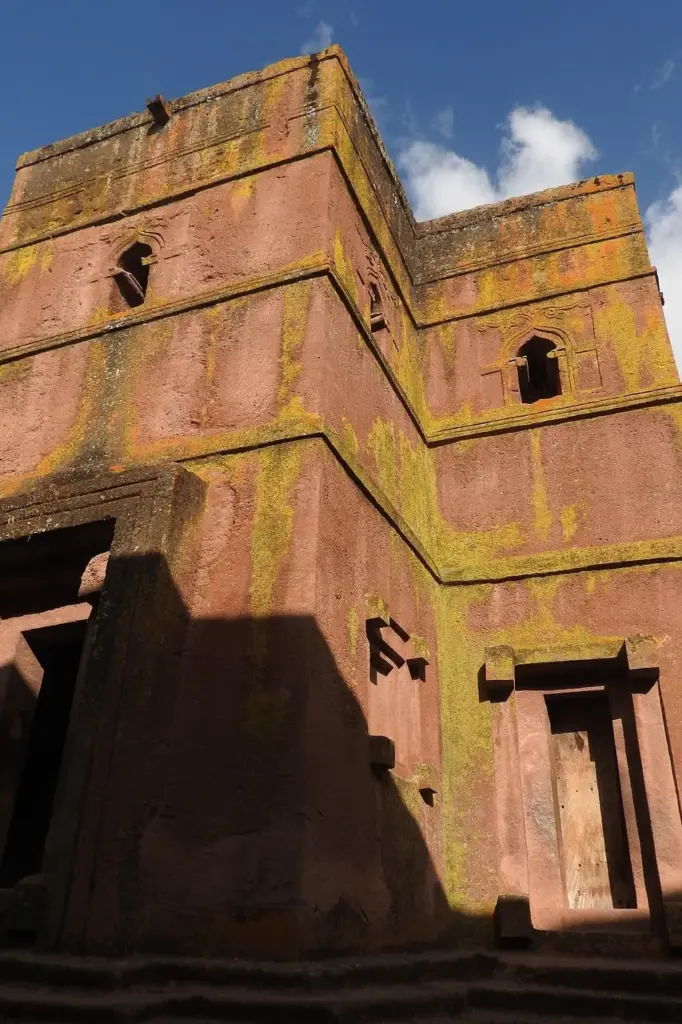
Start in Addis Ababa. The National Museum is where Lucy (Dinknesh) is displayed, Merkato is a maze of stalls and workshops, and the Entoto hills above the city have cooler air and long views. Up north, Lalibela’s churches were cut down into solid rock in the 12th and 13th centuries; Bete Giyorgis, carved in the shape of a cross, is the one on every postcard. Gondar has the 17th-century castles of the Fasil Ghebbi enclosure. Boats leave Bahir Dar for the old monasteries around Lake Tana, and the Blue Nile Falls are about an hour’s drive away. Trekkers come for the Simien Mountains and their gelada monkeys, while Axum is known for its ancient stelae. The Danakil Depression and the Omo Valley are usually visited on organised tours lasting several days.
Apps that help
In Addis, most visitors book cars through Ride, which saves haggling with street taxis over the fare. Google Maps works well enough in the capital, but download offline maps for the north and south, where you’ll often be out of range. The Ethiopian Airlines app is worth installing for domestic flights, which is how many people cover the long distances to Lalibela, Gondar or Axum. Locals pay with telebirr and M-PESA, both tied to a local number, so carry birr in cash; cards are taken mainly at bigger hotels in Addis. One local quirk: Ethiopians often count the hours from dawn, so check whether a pickup at ‘3 o’clock’ means 9 am.
Roaming tips
Ethiopia isn’t part of the EU’s roam-like-at-home zone, and home operators that offer roaming there usually charge high rates for it. Look up your tariff before the trip. Once you land, set the Esimy eSIM as your mobile-data line with Data Roaming on, then turn Data Roaming off for your home SIM so it can still take calls and bank texts without running up charges. This plan covers Ethiopia only. Flying on with Ethiopian Airlines to Nairobi or Cairo? Add our Kenya eSIM or Egypt eSIM for that part of the journey.
Why travelers choose Esimy Ethiopia
- Ethio Telecom’s wide reach and Safaricom’s city signal on a single eSIM
- Installed before you fly, with no passport check at a telecom shop in Addis
- The clock starts at your first connection in Ethiopia, so buying weeks ahead costs you nothing
- Works inside the Bole terminal, which helps on long Ethiopian Airlines connections
- Hotspot allowed, and extra data goes onto the same eSIM from your dashboard or the app
Best time to visit
- October to March: the dry season, and the usual time for the historic north and treks in the Simien Mountains
- 7 January: Genna, Ethiopian Christmas, when pilgrims fill Lalibela
- Around 19 January: Timkat, the Epiphany festival, at its liveliest in Gondar and Lalibela
- June to September: the main rains turn the highlands green, but trails get muddy and some road trips are harder
Support
24/7 support via live chat, email and WhatsApp.
eSIM FAQs
Common questions about using eSIM in Ethiopia
Should I buy a local SIM card in Ethiopia instead?
For a short visit, the eSIM is quicker. A local Ethio Telecom or Safaricom SIM card is registered against your passport at an operator shop, so you’ll need to find one and wait your turn. If you’re staying for months or need an Ethiopian number for local services, a local SIM is the better choice.
Which phones support it?
Phones with eSIM support that aren’t tied to one carrier, which covers recent iPhone, Samsung Galaxy and Google Pixel models. Our list of supported devices has the full rundown.
Can I use the eSIM as a hotspot?
Tethering is allowed. Watch your usage when a laptop is connected, since background updates can use up a small plan quickly.
What happens if I run out of data?
Top up the same eSIM from your Esimy dashboard or the app, with no new QR code. Do it while you’re in town, because on a Simien trek you may not have the signal to buy more.
What plan size suits a trip to Ethiopia?
For a fortnight on the northern route, 5 GB is usually enough for maps, messaging and photo uploads; choose 10 GB if you make regular video calls. A Bole layover or a few days in Addis needs only 1 GB, and remote workers should look at 20 GB. Unlimited isn’t on offer for Ethiopia, so 20 GB is the largest size.
What are the steps to activate an eSIM for Ethiopia?
- Buy online by card, Apple Pay or Google Pay. We email the QR code right after payment and don’t ask for ID.
- Connect to Wi-Fi, open your phone’s Mobile Data or Cellular settings, choose Add eSIM and scan the code.
- After landing, make the eSIM your data line and switch on Data Roaming for it. The APN fills in by itself.
What’s coverage like outside Addis Ababa?
Good in regional towns such as Bahir Dar, Gondar, Lalibela, Axum and Hawassa, and thinner on the long highland roads between them. In the Simien Mountains you’ll have signal in Debark, then long gaps on the trails. The Danakil Depression has no coverage, and the Omo Valley is patchy outside Jinka. Expect occasional disruptions in some regions as well, and look at current travel advice before you go.
Can I use an eSIM Ethiopia plan during a layover at Bole?
You can, and plenty of travellers buy it for exactly that. Two things to know first. Validity starts with your first connection, so if you switch it on during a layover now and come back to visit Ethiopia weeks later, the 7 or 30 days may already have run out. And it won’t work in your next country: for Nairobi, add our Kenya eSIM.
Will I have data as soon as I land at Addis Ababa Bole?
You should, provided you installed the eSIM beforehand and turn on Data Roaming for its line once you’re off the plane. Bole sits inside the city, so a Ride car to a hotel in Bole or Kazanchis is a short trip.
Is there an Ethiopia eSIM with a phone number?
Not with ours. The plan gives you data and nothing else, so there’s no Ethiopian number and you can’t make normal calls or send SMS. Call through WhatsApp or FaceTime instead. Your home SIM can stay switched on beside the eSIM, so bank codes still arrive.
Which networks does the eSIM Ethiopia plan use?
Ethio Telecom and Safaricom Ethiopia, both on 4G/LTE. Your phone joins whichever signal is stronger, and we don’t slow speeds at our end.
What is the best eSIM for Ethiopia?
It depends on where you’re going. Ethio Telecom reaches the most towns and highways, Safaricom is strongest in Addis Ababa and the other big cities, and our eSIM connects to both on 4G/LTE. Plans run from 1 GB for 7 days up to 20 GB for 30 days, and the days only start counting once you first connect in Ethiopia. Top-ups go onto the same eSIM, so there’s no second QR code to scan.