 Connected in Papua New Guinea
eSIM Papua New Guinea
Vodafone PNG data for Port Moresby and the main towns, with honest limits beyond them
Choose a Papua New Guinea eSIM plan
Choose the perfect plan for your Papua New Guinea adventure
1 GB
7 Days- 1 GB Internet
- Wi-Fi Hotspot Allowed
- QR code by email right after payment
- Validity Starting on First Use
3 GB
30 Days- 3 GB Internet
- Wi-Fi Hotspot Allowed
- QR code by email right after payment
- Validity Starting on First Use
5 GB
30 Days- 5 GB Internet
- Wi-Fi Hotspot Allowed
- QR code by email right after payment
- Validity Starting on First Use
10 GB
30 Days- 10 GB Internet
- Wi-Fi Hotspot Allowed
- QR code by email right after payment
- Validity Starting on First Use
All plans include 4G/5G coverage across Papua New Guinea • No contracts • Instant Activation
Why travelers choose Esimy
- No contracts
- 24-hour days, counted from your first connection at your destination
- Add data to the same eSIM anytime
- Wi-Fi hotspot: Allowed on all plans
Before you buy your Papua New Guinea eSIM
Is my phone compatible?
Quick check: dial *#06# on your phone. If an EID number appears, your phone supports eSIM. It also needs to be carrier-unlocked.
How much data do I need?
A rough estimate based on typical use. Video and hotspot use the most data.
eSIM Papua New Guinea on Vodafone PNG, strongest in Port Moresby and Lae
Your hotel driver will be waiting outside Jacksons International Airport, and an eSIM Papua New Guinea plan from Esimy lets you message them from arrivals, because it joins Vodafone PNG’s 4G/LTE network on landing.
Mobile data in PNG is expensive, for locals as well as visitors, and our prices here are well above what we charge for most destinations. A few days of meetings in Port Moresby rarely need more than the smallest plan, especially if your hotel has Wi-Fi. Coverage is a town thing. Port Moresby and Lae are the most dependable; the Highlands, the Sepik and the islands are patchy at best, and the Kokoda Track has none.
There’s no PNG phone number with this plan, because it’s data only. Calls go through WhatsApp or FaceTime instead, and your own SIM keeps receiving texts in dual-SIM mode. A Papua New Guinea SIM card from a local shop has to be registered in person with your passport. That makes sense for a long posting, but it’s a chore on a short visit.
The plan works in PNG only, so for the Brisbane or Cairns connection on the way in, use our Australia eSIM or the airport Wi-Fi.
Papua New Guinea eSIM at a glance
- Networks
- Vodafone PNG
- Speed
- 4G/LTE, 5G where available
- Plans
- 5 · from 8.99 €
- Validity
- 7–30 days 24-hour days, counted from your first connection at your destination
- Wi-Fi hotspot
- Allowed on all plans
- Calls & SMS
- Data only
- Top-up
- Add data to the same eSIM anytime No new QR code needed
- Delivery
- Instant delivery by email and in the Esimy app
- Refunds
- Within 30 days of purchase if the QR code hasn't been scanned Refund policy
Compare Papua New Guinea eSIM plans
Need help with your Papua New Guinea eSIM?
Real people, 24/7Message our support team on WhatsApp or by email. We help with installation, activation and connection problems, day and night.
How Esimy Works?
Select a Package
Choose from range of multiple countries/packages.

Scan QR Code with instructions received over your email
Easy activation with email details or our intuitive website dashboard.

Ready for travel!
Have the best trip possible without internet hassles.
Manage your eSIM with the Esimy App
Install, activate, and track your data — all from your phone.
- Add data to the same eSIM anytime
- Free 1 GB on every app order of 3 GB or more
- Send eSIMs as gifts and redeem the ones you receive
- Get notified about your data usage
- 5% back in your Esimy Wallet on every order
- Invite friends: €3 for you and €3 for them
Get it now
Available on the App Store and Google Play

eSIM vs Physical SIM Card in Papua New Guinea
Compare the benefits of using an eSIM data plan versus a traditional SIM card for international travel to Papua New Guinea.
Papua New Guinea Travel and Connectivity Guide
Usable in the towns, offline on the trek and at many remote lodges
Coverage areas
Expect signal where people live in numbers. Port Moresby, including the airport, Waigani and the hotels near Ela Beach, is where Vodafone PNG is at its strongest. Lae, the port city at the bottom of the Highlands Highway, comes next. In the larger provincial towns, such as Mount Hagen and Goroka in the Highlands, Madang on the north coast and Kokopo on New Britain, you’re more likely to find service, but check with your hotel or tour operator before relying on it. Outside the towns, assume nothing. Much of Papua New Guinea has no road link to anywhere else. Villages are reached by small plane, boat or on foot, and the valleys and river systems between them are often out of range of any tower.
Network
This eSIM runs on Vodafone PNG, operated by Digitec, over 4G/LTE, and it won’t hop onto any other network. Vodafone PNG is a relatively new network, and its towers are concentrated in towns rather than spread across the countryside. Where you do have signal (Port Moresby especially) we don’t throttle anything, so speed comes down to your distance from the tower and your handset. If you’re headed somewhere specific, such as a mine site, a mission station or a lodge on the Sepik, ask your host whether there’s any mobile signal before you count on it.
Choosing an eSIM Papua New Guinea plan
• 1–3 GB: a few days of meetings in Port Moresby or Lae, or a short stop on the way to a lodge, with hotel Wi-Fi for anything heavy
• 5–10 GB: two or three weeks moving between towns, with maps, flight updates and video calls whenever you’re back in range
• 20 GB: a longer work posting, with a laptop on hotspot whenever the office Wi-Fi fails
Tourist highlights
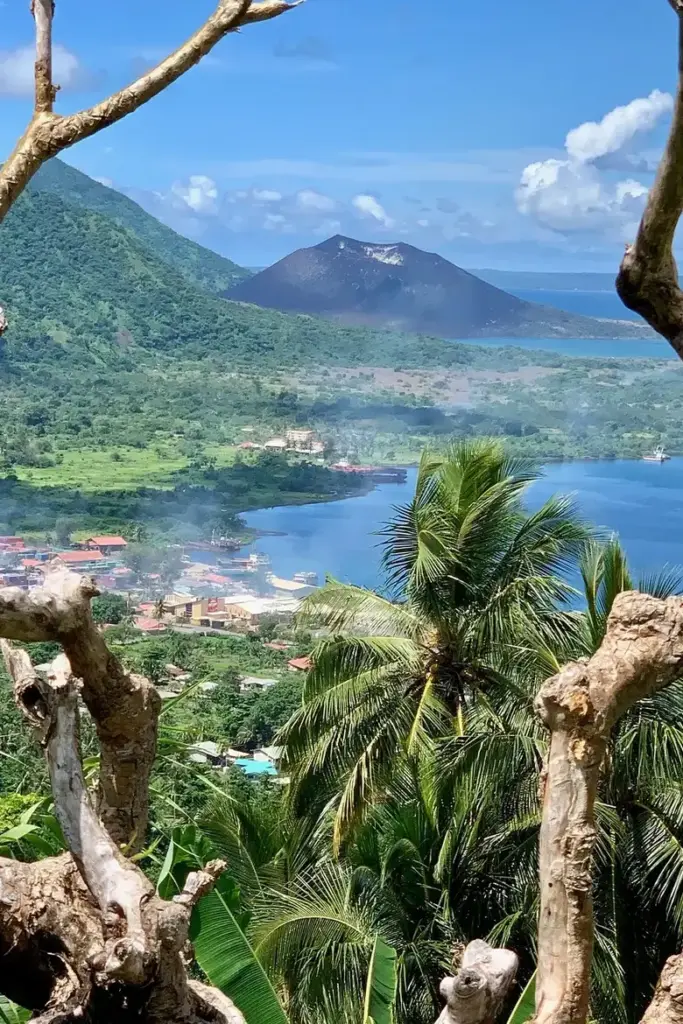
For many visitors the Highlands shows are the reason to come. At the Mount Hagen Show and the Goroka Show, sing-sing groups from across the region perform in full paint, feathers and shells. The Kokoda Track, the wartime trail over the Owen Stanley Range, takes most trekkers more than a week. Divers go to Madang, to Kimbe Bay on New Britain and to Milne Bay for reefs and wartime wrecks. Tufi, in Oro Province, has rainforest fjords with reef dives a short boat ride from the lodge. Near Rabaul, the volcano Tavurvur still smokes over Simpson Harbour, and Japanese wartime tunnels line the shore. Back in Port Moresby, the National Museum and Art Gallery sits next to Parliament House in Waigani.
Apps that help
Google Maps will find your hotel in Port Moresby or Lae, but it knows little beyond the towns, so download offline maps first. Ride-hailing isn’t something to plan around. Most visitors use transfers or drivers arranged by their hotel or tour company, which is also the usual security advice in Port Moresby and Lae. Getting between regions mostly means flying with Air Niugini or PNG Air, and schedules change at short notice; keep booking references saved offline and check your messages whenever you’re in range. Lodges, guides and drivers lean heavily on WhatsApp. Carry kina in cash for markets and small towns. Cards are fine at the bigger hotels.
Roaming tips
Roaming charges for PNG on a home plan can be steep, so look up your provider’s rate before you fly. In settings, give mobile data to the Esimy line, allow it to roam, and turn roaming off for your home SIM. Most international flights come in through Australia, via Brisbane, Cairns or Sydney, and the PNG plan won’t connect there, so the Australia eSIM is the one for that layover. Carrying on across the Pacific? Our Fiji eSIM takes over in Nadi. On the Kokoda Track or at a remote lodge, airplane mode saves battery. Trek operators and lodges out there tend to rely on satellite phones or their own satellite Wi-Fi.
Why travelers choose Esimy Papua New Guinea
- Connects to Vodafone PNG over 4G/LTE in Port Moresby, Lae and other main towns
- On your phone before the flight, so there’s no SIM shop or registration on arrival
- Days start at the first connection in PNG, handy when you fly in via Australia
- Small plans for short business trips, and more data on the same eSIM if you need it
- Hotspot allowed for a laptop in a hotel room or site office
Best time to visit
- May to October: drier months in Port Moresby and much of the country, and the main Kokoda trekking season
- August: the Mount Hagen Show in the Western Highlands
- September: the Goroka Show, held around Independence Day on 16 September; book flights and rooms well ahead
- December to March: the wettest stretch in many areas, with more flight delays and muddy roads
Support
24/7 support via live chat, email and WhatsApp.
eSIM FAQs
Common questions about using eSIM in Papua New Guinea
Is a Papua New Guinea SIM card for tourists a better option?
For a long stay, possibly. A local SIM gives you a local number, which an eSIM can’t, but it has to be registered with your passport in person. On a short visit, a Papua New Guinea eSIM set up at home saves you that trip to a shop on your first day.
Will my phone work with it?
If it supports eSIM and isn’t tied to one carrier, it should. Recent iPhones qualify, as do many Galaxy phones from Samsung and Pixels from Google; look yours up in the list of supported devices.
Will a laptop run off my hotspot?
It will, and that’s fine for email from a hotel room in Lae. A laptop syncing files will eat a small plan fast, though, so pause cloud backups first.
Can I add more data later?
Log in to the dashboard or open the Esimy app, and the data goes onto the same eSIM. Do it while you’re in Port Moresby or another town with signal or Wi-Fi, not halfway up a valley.
Is 1 GB enough for a week in PNG?
For a week of meetings in Port Moresby, usually, as long as the hotel has Wi-Fi; 3 GB gives you breathing room. A longer trip between towns suits 5 or 10 GB, though you’ll be out of range for much of it. There’s no unlimited plan for Papua New Guinea. The largest is 20 GB, and given what data costs here, buy small and top up.
How do I get the eSIM working on my phone?
Checkout accepts cards, Apple Pay and Google Pay without asking for ID, and you’ll get the QR code by email as soon as you’ve paid. Scan it at home on Wi-Fi, then leave the line alone until you land. In PNG, allow Data Roaming on the eSIM and select it for mobile data. The APN is automatic, and the plan’s days begin at that first connection.
Does eSIM Papua New Guinea coverage reach the Highlands and the islands?
Only in places, and it’s worth checking ahead.
- Highlands: you may find signal in Mount Hagen and Goroka, but the Highlands Highway between towns and the valleys off it have long gaps.
- North coast and New Britain: try it in Madang and around Kokopo and Rabaul; dive resorts often depend on their own Wi-Fi.
- Tufi, the Sepik and the outer islands of Milne Bay: treat these as offline unless your lodge tells you otherwise.
Is there any signal on the Kokoda Track?
No. Plan on being out of mobile coverage for the whole trek, which most groups walk over eight to ten days. Trek companies normally carry a satellite phone for emergencies. Send your messages from Port Moresby before you set off for the trailhead, and keep the phone in airplane mode so the battery lasts for photos.
Which mobile network does the eSIM use in PNG?
Vodafone PNG, on 4G/LTE, and nothing else. Where Vodafone has no tower, the eSIM has no other network to fall back on.
Will I get a PNG phone number?
You won’t. The plan is data only, so it comes without a local number, calls or SMS. WhatsApp or FaceTime handle calls, and your home number keeps working in the other SIM slot for texts.
Does the eSIM Papua New Guinea plan work at Jacksons International Airport?
It should. Jacksons is in Port Moresby, where Vodafone PNG’s coverage is at its best. Install the eSIM at home and enable its Data Roaming once you’ve landed, and it should pick up signal while you’re still in the terminal.
What is the best eSIM for Papua New Guinea?
The one that works where you’re actually going. Ours connects to Vodafone PNG on 4G/LTE, installs before you leave and needs no ID. There are five sizes, starting with 1 GB for a week; the 20 GB top plan lasts 30 days, and the clock only starts when you first connect in PNG. Coverage is strongest in Port Moresby and the main towns; if most of your trip is in remote villages, no eSIM changes that, and a lodge’s satellite Wi-Fi may be all you get.