 Connected in Uruguay
eSIM Uruguay
Antel and Movistar 4G for Montevideo and the summer coast, with notes on the ferry
Choose a Uruguay eSIM plan
Choose the perfect plan for your Uruguay adventure
1 GB
7 Days- 1 GB Internet
- Wi-Fi Hotspot Allowed
- Instant Activation
- Validity Starting on First Use
3 GB
30 Days- 3 GB Internet
- Wi-Fi Hotspot Allowed
- Instant Activation
- Validity Starting on First Use
5 GB
30 Days- 5 GB Internet
- Wi-Fi Hotspot Allowed
- Instant Activation
- Validity Starting on First Use
10 GB
30 Days- 10 GB Internet
- Wi-Fi Hotspot Allowed
- Instant Activation
- Validity Starting on First Use
All plans include 4G/5G coverage across Uruguay • No contracts • Instant Activation
Why travelers choose Esimy
- No contracts
- 24-hour days, counted from your first connection at your destination
- Add data to the same eSIM anytime
- Wi-Fi hotspot: Allowed on all plans
Before you buy your Uruguay eSIM
Is my phone compatible?
Quick check: dial *#06# on your phone. If an EID number appears, your phone supports eSIM. It also needs to be carrier-unlocked.
How much data do I need?
A rough estimate based on typical use. Video and hotspot use the most data.
eSIM Uruguay with Antel and Movistar, for the river ports and the Atlantic beaches
Install an eSIM Uruguay plan at home and it’s working by the time you reach the arrivals hall at Carrasco. It connects to two networks, Antel and Movistar, on 4G/LTE, and coverage is good in the capital and along the coast road east to Punta del Este.
Most trips follow a similar shape. You spend a few days in the capital for Ciudad Vieja, lunch at the Mercado del Puerto and evenings on the Rambla, then take a COT or Copsa bus from Tres Cruces terminal east to the coast or west to Colonia. Maps, ride apps and WhatsApp won’t use much data. Cabo Polonio is where good signal ends: the village isn’t on the power grid and coverage is limited, much as it is on quiet roads in the interior.
This is a Uruguay-only plan. Arriving on the Buquebus or Colonia Express ferry from Buenos Aires? You’ll want our Argentina eSIM for that side of the river. On the northern and eastern borders, Rivera and Chuy run straight into Brazilian towns, and the Brazilian side needs a Brazil eSIM.
Expect data and nothing else: no Uruguayan number, no SMS. Messages and calls go through WhatsApp or FaceTime, and your home SIM can stay on for everything else. A laptop can run off your phone’s hotspot, and topping up keeps you on the same eSIM.
Uruguay eSIM at a glance
- Networks
- Antel, Movistar
- Speed
- 4G/LTE, 5G where available
- Plans
- 5 · from 2.49 €
- Validity
- 7–30 days 24-hour days, counted from your first connection at your destination
- Wi-Fi hotspot
- Allowed on all plans
- Calls & SMS
- Data only
- Top-up
- Add data to the same eSIM anytime No new QR code needed
- Delivery
- Instant delivery by email and in the Esimy app
- Refunds
- Within 30 days of purchase if the QR code hasn't been scanned Refund policy
Compare Uruguay eSIM plans
Need help with your Uruguay eSIM?
Real people, 24/7Message our support team on WhatsApp or by email. We help with installation, activation and connection problems, day and night.
Travelling to more countries?
Uruguay is also covered by these regional eSIMs:
How Esimy Works?
Select a Package
Choose from range of multiple countries/packages.

Scan QR Code with instructions received over your email
Easy activation with email details or our intuitive website dashboard.

Ready for travel!
Have the best trip possible without internet hassles.
Manage your eSIM with the Esimy App
Install, activate, and track your data — all from your phone.
- Add data to the same eSIM anytime
- Free 1 GB on every app order of 3 GB or more
- Send eSIMs as gifts and redeem the ones you receive
- Get notified about your data usage
- 5% back in your Esimy Wallet on every order
- Invite friends: €3 for you and €3 for them
Get it now
Available on the App Store and Google Play

eSIM vs Physical SIM Card in Uruguay
Compare the benefits of using an eSIM data plan versus a traditional SIM card for international travel to Uruguay.
Uruguay Travel and Connectivity Guide
Beach towns, wine country and the ferry over the Río de la Plata
Coverage areas
Montevideo end to end: Ciudad Vieja, Centro, Pocitos, Punta Carretas and the Rambla out to Carrasco and the airport. East along the coast through Atlántida, Piriápolis, Maldonado, Punta del Este, La Barra and José Ignacio, then on to La Paloma and Punta del Diablo in Rocha. West to Colonia del Sacramento and Carmelo on the river. Inland, the main towns are covered, including Salto, Paysandú, Tacuarembó and Rivera, but the cattle country between them has stretches with weak or no signal.
Network
Connects to Antel and Movistar on 4G/LTE. Montevideo, the Canelones coast, the Maldonado resorts, Colonia and the larger inland towns all get good signal. It thins out in Cabo Polonio, among the dunes and lagoons of Rocha, inside Santa Teresa National Park and at Quebrada de los Cuervos. In late December and January, crowds in Punta del Este can slow uploads at busy hours. You can usually choose the network manually in your phone’s settings if one is weak. Esimy adds no throttling, so the speed you see depends on signal, location and your device.
How much data on an eSIM Uruguay plan
• 1–3 GB: a long weekend in Colonia from Buenos Aires, or a few days in Montevideo with maps, rides and WhatsApp
• 5–10 GB: a week or two along the coast, with beach photos, Instagram stories and video calls home
• 20 GB: a full summer month in Punta del Este or José Ignacio, remote work, or a laptop on hotspot
Tourist highlights
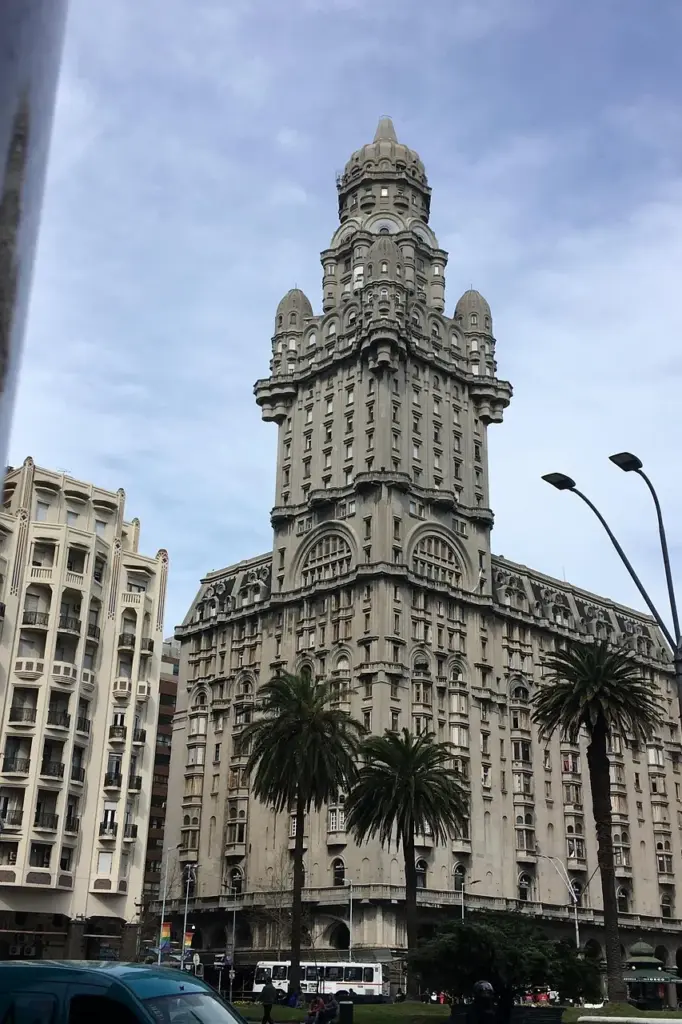
Ciudad Vieja in Montevideo, with Plaza Independencia, Palacio Salvo and Teatro Solís; a long lunch at the grills of the Mercado del Puerto; the Rambla at sunset, on foot or by bike; the Barrio Histórico of Colonia del Sacramento, a UNESCO World Heritage Site, and its lighthouse; La Mano on Playa Brava and Casapueblo at Punta Ballena; quieter sand at José Ignacio and Punta del Diablo; the sea lions and lighthouse at Cabo Polonio; Tannat wineries in Canelones and around Carmelo; and the thermal pools near Salto. Everywhere you go, people carry a thermos under one arm and a mate gourd in hand.
Apps that help
Uber and Cabify for rides in Montevideo; PedidosYa, which started in Uruguay, for food delivery; Google Maps for walking routes and the drive along the coast; and WhatsApp, which guesthouses, wineries and tour guides use for bookings. COT and Copsa run intercity buses out of Tres Cruces terminal, and it’s worth checking timetables online before summer weekends. Cards and phone wallets are widely accepted in Montevideo and Punta del Este, but keep some pesos for kiosks and beach stalls.
Roaming tips
Visitors from Argentina or Brazil may be able to roam on their home line, at whatever rate their operator sets, so check before you travel. From Europe or North America, roaming in Uruguay usually costs a lot. Set the Esimy eSIM as your mobile-data line with Data Roaming on, and switch Data Roaming off for your home SIM; it still takes calls and texts. On the ferry from Buenos Aires the signal drops out mid-river, so change the data line to the Uruguay eSIM once you’ve docked in Colonia or Montevideo. Chuy and Rivera are border towns whose other halves, Chuí and Santana do Livramento, are in Brazil and outside this plan.
Why travelers choose Esimy Uruguay
- Connects to both Antel and Movistar on 4G/LTE, not just one network
- Working at Carrasco Airport or the Colonia ferry port without a visit to a phone shop
- Validity counts from your first connection in Uruguay, so buying a few weeks early is fine
- Run a laptop or a travel companion’s phone off your hotspot
- Sits next to an Argentina or Brazil eSIM on the same phone for a multi-country trip
Best time to visit
- December to February: summer, when Punta del Este and José Ignacio fill up, above all in January
- Carnival, from late January into early March: murgas and candombe drums in Montevideo, including the Desfile de Llamadas through Barrio Sur and Palermo
- Semana de Turismo (Holy Week): half the country goes on holiday, so book buses and coastal rooms early
- March to May: warm early autumn, a calmer coast and harvest time at the wineries
Support
24/7 support via live chat, email and WhatsApp.
eSIM FAQs
Common questions about using eSIM in Uruguay
Which phones are compatible?
Unlocked phones with eSIM support: recent iPhones, Samsung Galaxy and Google Pixel models, and plenty of others. Check the list of supported devices before you buy.
Can I share data with hotspot?
Tethering is allowed, which helps if the Wi-Fi in your beach rental at La Pedrera or Punta del Diablo is slow. A laptop gets through data much faster than a phone, though.
What plan size suits a week in Montevideo and Colonia, and is there unlimited data?
Usually 3 GB, if you stick to maps, rides and messaging. Heavy video posting or remote work calls for 5 or 10 GB, and a month on the coast for 20 GB. Unlimited isn’t on offer for Uruguay. The biggest plan is 20 GB, and you can add more later.
Can I top up if I run out in Punta del Este?
In a couple of taps, from the Esimy dashboard or the app. The extra data goes onto the eSIM that’s already installed, with no new QR code.
What are the steps to install and activate it?
- Checkout takes a card, Apple Pay or Google Pay; the QR code is emailed straight away, with no ID check
- On Wi-Fi, open your phone’s mobile or cellular settings, choose Add eSIM and scan the code
- Once you’ve landed in Uruguay, turn on Data Roaming for the eSIM and make it your mobile-data line
- The APN sets itself, and validity begins at your first connection in the country
Would a Uruguay SIM card be better for a short trip?
For a holiday, probably not. A local SIM usually means finding an open phone shop, showing your passport and swapping out your home SIM. It’s the better choice if you’re staying for several months or need a Uruguayan number for local services. For a trip of a week or three, the eSIM is ready before you fly.
Can I use it on the ferry to Buenos Aires?
Only on the Uruguayan side. Signal fades mid-river on the Buquebus and Colonia Express crossings, and once you’re in Buenos Aires you’ll need our Argentina eSIM. Install both before the trip and change the mobile-data line when you dock.
How good is eSIM Uruguay coverage at Cabo Polonio and inland?
Uneven. Montevideo, the coast road through Punta del Este and the main inland towns are well covered. At Cabo Polonio, a village off the power grid, signal is limited and can disappear in the dunes. Santa Teresa National Park, Quebrada de los Cuervos and the empty cattle country between interior towns have gaps too, so download offline maps before you set off.
Is my eSIM Uruguay plan live as soon as I land at Carrasco?
Provided you installed it on Wi-Fi before the flight, yes. After landing, turn on Data Roaming for the eSIM line and set it as your mobile-data line. You can then message your host and check the route into Montevideo before you leave the terminal.
Which networks does it use in Uruguay?
Antel and Movistar, on 4G/LTE. Your phone normally picks between them on its own, and in Montevideo or along the coast you’re unlikely to notice which one it chose.
Is a phone number included with the Uruguay eSIM?
It’s data only, so there’s no Uruguayan number and no calls or SMS. Uruguayans live on WhatsApp, and so do most guesthouses and tour operators, which means messaging covers nearly everything on a holiday. Leave your home SIM switched on in dual-SIM for normal calls and bank texts.
What is the best eSIM for Uruguay?
Ours connects to two networks, Antel and Movistar, on 4G/LTE, which counts for more once you leave Montevideo for the coast or the interior. You can buy anything from 1 GB over 7 days to 20 GB over 30. Hotspot is allowed, top-ups go onto the eSIM you already installed, and you won’t be asked for ID.