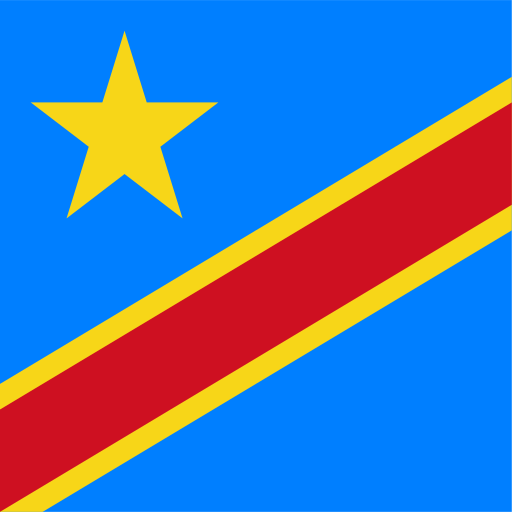
 Connected in DR Congo
eSIM DR Congo
Airtel DRC data for Kinshasa, Lubumbashi and work trips across a very large country
Choose a DR Congo eSIM plan
Choose the perfect plan for your DR Congo adventure
1 GB
7 Days- 1 GB Internet
- Wi-Fi Hotspot Allowed
- Instant Activation
- Validity Starting on First Use
3 GB
30 Days- 3 GB Internet
- Wi-Fi Hotspot Allowed
- Instant Activation
- Validity Starting on First Use
5 GB
30 Days- 5 GB Internet
- Wi-Fi Hotspot Allowed
- Instant Activation
- Validity Starting on First Use
10 GB
30 Days- 10 GB Internet
- Wi-Fi Hotspot Allowed
- Instant Activation
- Validity Starting on First Use
All plans include 4G/5G coverage across DR Congo • No contracts • Instant Activation
Why travelers choose Esimy
- No contracts
- 24-hour days, counted from your first connection at your destination
- Add data to the same eSIM anytime
- Wi-Fi hotspot: Allowed on all plans
Before you buy your DR Congo eSIM
Is my phone compatible?
Quick check: dial *#06# on your phone. If an EID number appears, your phone supports eSIM. It also needs to be carrier-unlocked.
How much data do I need?
A rough estimate based on typical use. Video and hotspot use the most data.
eSIM DR Congo: Airtel data for Kinshasa, Lubumbashi and the field
An eSIM DR Congo plan from Esimy runs on Airtel DRC’s 4G/LTE network, so your messages come through before you’ve cleared the terminal at N’djili International Airport.
Set it up at home on Wi-Fi. In Kinshasa, turn on Data Roaming for the eSIM line and make it your mobile-data line; the APN sorts itself out. There’s no passport registration and no queue, which helps on a late arrival with an early start in Gombe.
Signal is good across Kinshasa and Lubumbashi. Goma, Kisangani, Matadi and the other provincial towns have coverage too, but it’s less reliable, and the country is so large that most of it lies far from any mast. Virunga National Park has none. Download maps and documents before a field trip or a domestic flight.
This DR Congo eSIM is data only. You get no Congolese number, so calls go over WhatsApp, Teams or FaceTime while your own SIM handles texts. It covers the DRC only, not Brazzaville across the river. If your route goes through Nairobi or on to East Africa, add our Kenya eSIM or Tanzania eSIM for those legs.
DR Congo eSIM at a glance
- Networks
- Airtel Congo RDC
- Speed
- 4G/LTE, 5G where available
- Plans
- 5 · from 4.99 €
- Validity
- 7–30 days 24-hour days, counted from your first connection at your destination
- Wi-Fi hotspot
- Allowed on all plans
- Calls & SMS
- Data only
- Top-up
- Add data to the same eSIM anytime No new QR code needed
- Delivery
- Instant delivery by email and in the Esimy app
- Refunds
- Within 30 days of purchase if the QR code hasn't been scanned Refund policy
Compare DR Congo eSIM plans
Need help with your DR Congo eSIM?
Real people, 24/7Message our support team on WhatsApp or by email. We help with installation, activation and connection problems, day and night.
Travelling to more countries?
DR Congo is also covered by these regional eSIMs:
How Esimy Works?
Select a Package
Choose from range of multiple countries/packages.

Scan QR Code with instructions received over your email
Easy activation with email details or our intuitive website dashboard.

Ready for travel!
Have the best trip possible without internet hassles.
Manage your eSIM with the Esimy App
Install, activate, and track your data — all from your phone.
- Add data to the same eSIM anytime
- Free 1 GB on every app order of 3 GB or more
- Send eSIMs as gifts and redeem the ones you receive
- Get notified about your data usage
- 5% back in your Esimy Wallet on every order
- Invite friends: €3 for you and €3 for them
Get it now
Available on the App Store and Google Play

eSIM vs Physical SIM Card in DR Congo
Compare the benefits of using an eSIM data plan versus a traditional SIM card for international travel to DR Congo.
DR Congo Travel and Connectivity Guide
Where the signal holds in the DRC, and where you'll work offline
Coverage areas
Kinshasa is where the signal is most dependable: Gombe, with its ministries, embassies and the offices along the Boulevard du 30 Juin, plus Limete, Ngaliema, Kintambo and the long airport road out to N’djili. Lubumbashi is the other strong point and the usual base for mining work in Haut-Katanga. Goma, Bukavu, Kisangani, Matadi, Kolwezi and the other provincial capitals have signal in and around town, though it’s less consistent there. Once you leave a town, plan for gaps.
Network
Connects to Airtel DRC (Airtel Congo RDC) on 4G/LTE, and to no other network. Coverage holds well in Kinshasa and Lubumbashi. Elsewhere it gets patchier the further you are from a provincial capital. The DRC is roughly the size of Western Europe, much of it forest and river, and long stretches between towns have no signal at all. Inside Virunga National Park there’s no coverage. Most people cover the big distances by domestic flight, so download what you need before boarding. There’s no throttling at our end. Speed comes down to signal strength, where you are and the handset.
Data usage tips
• 1–3 GB: a short mission in Kinshasa, with email, WhatsApp and maps for the drives between meetings
• 5–10 GB: two to four weeks split between Kinshasa and a provincial office, with regular video calls and shared documents
• 20 GB: a month-long rotation in Lubumbashi or Kolwezi, or a laptop running off the phone’s hotspot most days
Tourist highlights
Most visitors come to work, but the gaps between meetings are worth using. In Kinshasa there’s the Lola ya Bonobo sanctuary on the city’s edge, the Académie des Beaux-Arts, live rumba in the bars of Matonge, and the riverfront, where Brazzaville is in plain view on the far bank. Zongo Falls makes a weekend trip from the capital. In the east, Goma and Bukavu sit on the shores of Lake Kivu. Virunga, Africa’s oldest national park, is known for mountain gorillas and the Nyiragongo volcano; visits depend on current conditions, so follow your organisation’s and government’s travel advice. Kisangani, far upriver, is the gateway to the Boyoma Falls.
Apps that help
WhatsApp is the default in Kinshasa for drivers, hotels, colleagues and fixers. Google Maps is usable in Kinshasa and Lubumbashi; save offline maps for anywhere else before you go. Don’t plan around ride-hailing: most business and NGO visitors move with a company or hotel driver. Airtel Money is everywhere for local payments but needs a registered Congolese line. US dollars circulate alongside Congolese francs, and clean, undamaged notes are the ones people accept without fuss. Remember that Kinshasa runs an hour behind Lubumbashi and Goma when you set up calls.
eSIM DR Congo roaming tips
The DRC isn’t in the EU roaming zone, and a home plan used here can bill heavily for every megabyte. Add the Esimy eSIM on Wi-Fi before the flight. After landing at N’djili, turn on Data Roaming for the eSIM line and choose it for mobile data, then switch data roaming off on your home SIM. That line stays reachable for bank codes and calls. The plan works in DR Congo only: crossing to Brazzaville, or to Rwanda from Goma, needs a separate plan for that side.
Why travelers choose Esimy DR Congo
- Online at N’djili before the long drive into Gombe, with no SIM counter on arrival
- Runs on Airtel DRC 4G/LTE, with its best coverage in Kinshasa and Lubumbashi
- No passport registration, which matters when you land late and leave for a site early
- Validity counts from first connection in the DRC, so you can buy it well ahead of a deployment
- Hotspot allowed, and top-ups go on the same eSIM
Best time to visit
- Kinshasa and the west: roughly June to September is the dry season, cooler and often hazy; the rest of the year brings heavy storms that can flood roads for a few hours
- Lubumbashi and the south: dry from about May to October, with rain from November to April
- Goma and the east: wet and dry spells alternate through the year, and the altitude keeps the temperatures milder
Support
24/7 support via live chat, email and WhatsApp.
eSIM FAQs
Common questions about using eSIM in DR Congo
Is a local SIM card in Kinshasa a better option?
For a posting of several months, maybe. A local SIM gives you a Congolese number and access to mobile money, but you register it in person with your passport at an operator shop. For a trip of a few weeks the eSIM is simpler: it’s on your phone before you fly and your own SIM stays in place.
Which phones work with this eSIM?
Phones that support eSIM and aren’t locked to a carrier, such as recent iPhone, Samsung Galaxy and Google Pixel models. Check yours in our list of supported devices. Organisation-managed phones sometimes block new eSIM profiles, so check with your IT team before the trip.
Can I share data with my laptop as a hotspot?
You can. Hotspot and tethering are allowed, which is handy when the guesthouse or office connection drops. Laptops eat data quickly, so pick 10 or 20 GB if you plan to rely on it.
My deployment got extended. Can I top up?
Yes, from your Esimy dashboard or the app, onto the same eSIM. No new QR code. Do it while you’re still in town, because a remote site may not give you enough signal to load the page.
How much data do I need for a mission or rotation in the DRC?
A week of meetings in Kinshasa with email and WhatsApp fits in 1 to 3 GB. Daily video calls over a few weeks push you to 5 or 10 GB, and a month on a mine site or a laptop on hotspot calls for 20 GB. There’s no unlimited data plan for DR Congo; if 20 GB runs short, you top up.
How do I install and activate an eSIM in the DRC?
- Pay online by card, Apple Pay or Google Pay. No ID is needed, and the QR code lands in your inbox straight after payment.
- On Wi-Fi, scan it under Add eSIM in your phone’s mobile or cellular settings, ideally before you travel.
- In the DRC, turn on Data Roaming for the eSIM line and select it for mobile data. The APN configures itself, and validity starts with that first connection.
What is coverage like outside Kinshasa and Lubumbashi?
Patchy. Provincial towns such as Goma, Bukavu, Kisangani, Matadi and Kolwezi have signal in and around the center, but it’s less consistent than in the two big cities. Between towns, on rivers and in the forest you’ll often have none, and inside Virunga National Park there’s no coverage. Treat any field day as an offline day and download what you need first.
Will it work as soon as I land at N’djili International Airport?
If you installed it beforehand, yes: switch on the eSIM line and its Data Roaming in the arrivals hall and it connects to Airtel. That’s useful for finding your driver, since the drive into Gombe can be long in Kinshasa traffic.
Can I get a DR Congo eSIM with a phone number?
Not with this plan. It’s data only: no Congolese number, no calls, no SMS. Keep your home SIM active in dual-SIM for texts and bank codes, and make calls over WhatsApp or Teams, which is how most offices and drivers in Kinshasa communicate anyway.
Which network does the DRC eSIM use?
Airtel DRC, also known as Airtel Congo RDC, on 4G/LTE. It connects to that one network and doesn’t hop to others.
Which Congo does this eSIM cover? Will it work in Brazzaville?
It covers the Democratic Republic of the Congo only. The DRC (capital Kinshasa) and the Republic of the Congo (capital Brazzaville) are two separate countries facing each other across the Congo River, and few capitals anywhere sit closer together. Take the ferry from Beach Ngobila to Brazzaville and this plan stops working once you’re on the other side, so you’d need a separate Republic of the Congo eSIM as well. Install both before the crossing and switch your mobile-data line when you land.
What is the best eSIM for DR Congo?
In a country this size, the honest answer is about coverage, because no network reaches everywhere. Esimy’s eSIM connects to Airtel DRC on 4G/LTE, which is at its best in Kinshasa and Lubumbashi. Plans run from 1 GB for 7 days to 20 GB for 30 days, counted from your first connection in the DRC, and you can buy without ID.